

What Are Melanocortin Peptides?
Melanocortin peptides (melanocortins) are the peptides cut from the precursor proopiomelanocortin (POMC), namely adrenocorticotropic hormone (ACTH) and alpha-, beta- and gamma-melanocyte-stimulating hormone (alpha-MSH, beta-MSH, gamma-MSH), together with synthetic analogues built from them. They act at five G protein-coupled receptors, MC1R to MC5R, and the system also has two endogenous antagonists, agouti and agouti-related protein (AgRP) (Cone, 2006).
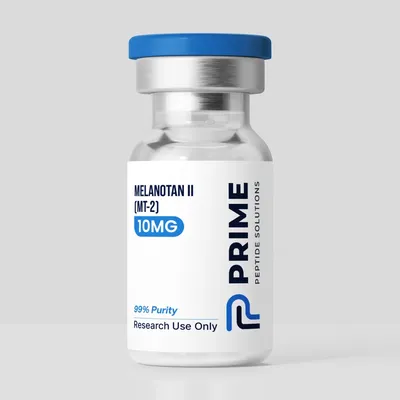
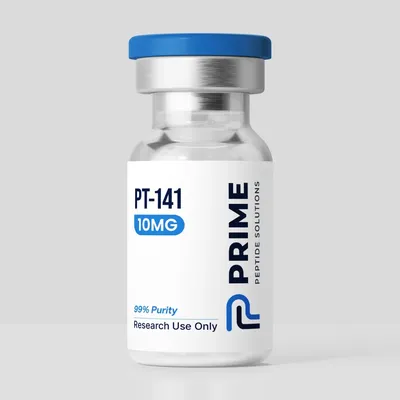
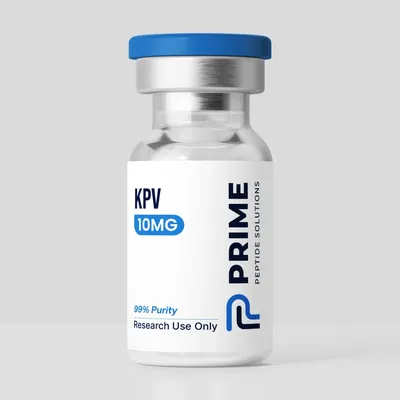
This hub covers three synthetic members: Melanotan II (MT-II, MT-2, MTII), a cyclic alpha-MSH analogue; PT-141 (bremelanotide), its C-terminal acid form; and KPV (Lys-Pro-Val, alpha-MSH 11-13), the last three residues of alpha-MSH. It maps the five receptors, gives identity data and groups findings by study model. Single-compound pages go deeper: the Melanotan II overview, the PT-141 overview and the KPV overview.
This article is a scientific overview for laboratory researchers. The research-grade Melanotan II (MT-2), PT-141 and KPV supplied by Prime Peptide Solutions are sold strictly for in-vitro laboratory research. They are not approved for human use and are not for human or animal consumption.
The Melanocortin Receptor Map: MC1R to MC5R
The five receptors were cloned between 1992 and 1994. Mountjoy and colleagues cloned the mouse and human MSH receptors (now MC1R) and a human ACTH receptor (MC2R), a subfamily of receptors coupled to guanine nucleotide-binding proteins (Mountjoy et al., 1992). MC3R, MC4R and MC5R followed in 1993 and 1994 (Gantz et al., 1993; Gantz et al., 1993; Gantz et al., 1994).
Receptor Map at a Glance
- MC1R (the MSH receptor): a human cDNA for it was isolated from melanoma cells. In transfected COS-7 cells, a labelled MSH analogue bound to the receptor was displaced by alpha-MSH, beta-MSH, gamma-MSH and ACTH, but not by the non-melanotropic peptide beta-endorphin (Chhajlani and Wikberg, 1992). Agouti protein antagonizes it with high affinity (Lu et al., 1994).
- MC2R (the ACTH receptor): recognizes primarily ACTH peptides, whereas the other four receptors also recognize alpha-MSH and potent alpha-MSH analogues (Hruby et al., 1995).
- MC3R: a 361-amino-acid human receptor expressed in brain, placental and gut tissue but not in melanoma cells or the adrenal gland (Gantz et al., 1993). In brain it sits in hypothalamic and limbic regions, including POMC neurons of the arcuate nucleus, and unlike the MSH and ACTH receptors it is potently activated by gamma-MSH (Roselli-Rehfuss et al., 1993).
- MC4R: expressed primarily in the brain and absent from the adrenal cortex, melanocytes and placenta; agonists raised cAMP in transfected cells, and the human gene maps to chromosome 18q21.3 (Gantz et al., 1993). AgRP is a potent, selective antagonist at MC3R and MC4R (Ollmann et al., 1997), and agouti also antagonizes MC4R (Lu et al., 1994).
- MC5R: the mouse receptor raised cyclic AMP (cAMP) with the potency order alpha-MSH > beta-MSH > ACTH > gamma-MSH, and its mRNA was found in skeletal muscle, lung, spleen and brain (Gantz et al., 1994).
The receptors also differ in which part of alpha-MSH they need: MC3R responds to the heptapeptide core shared by ACTH and the three MSH peptides (Gantz et al., 1993), while at mouse MC5R the core alone was inactive and the amino- and carboxyl-terminal portions of alpha-MSH were key (Gantz et al., 1994).
Identity: Melanotan II, PT-141 and KPV
Alpha-MSH itself is Ac-Ser-Tyr-Ser-Met-Glu-His-Phe-Arg-Trp-Gly-Lys-Pro-Val-NH2, 13 residues with an acetylated N-terminus and an amidated C-terminus (Al-Obeidi et al., 1989). The identity values below match the specifications box on each product page.
Melanotan II: Molecule at a Glance
- Sequence: Ac-Nle-cyclo[Asp-His-D-Phe-Arg-Trp-Lys]-NH2 (7 residues; lactam bridge between the Asp and Lys side chains)
- Design name: Ac-[Nle4, Asp5, D-Phe7, Lys10]-alpha-MSH(4-10)-NH2
- Molecular formula: C50H69N15O9
- Molecular weight: 1024.2 g/mol
- CAS number: 121062-08-6
- PubChem: CID 92432
PT-141: Molecule at a Glance
- Sequence: Ac-Nle-cyclo[Asp-His-D-Phe-Arg-Trp-Lys]-OH (7 residues)
- Molecular formula: C50H68N14O10
- Molecular weight: 1025.2 g/mol
- CAS number: 189691-06-3
- PubChem: CID 9941379
- Also called: bremelanotide
- Relation to MT-II: the same ring and sequence, with a C-terminal carboxylic acid (-OH) in place of the amide (-NH2)
KPV: Molecule at a Glance
- Sequence: H-Lys-Pro-Val-OH (3 residues; alpha-MSH 11-13)
- Molecular formula: C16H30N4O4
- Molecular weight: 342.43 g/mol
- CAS number: 67727-97-3
- PubChem: CID 125672
- C-terminus: free acid, while valine 13 in alpha-MSH carries an amide
Because MT-II and PT-141 differ only at the C-terminus, PubChem lists monoisotopic masses of 1023.54 and 1024.52 Da, a gap of just under 1 Da that a mass-spectrometry identity check has to resolve; see HPLC and mass spec explained.
Findings by Study Model
Studies in people are outside the scope of this receptor-pharmacology page.
Cloned receptors in cultured cells
At the cloned human MC1R, MT-II bound with an IC50 of 0.57 nM and stimulated cAMP with an EC50 of 0.20 nM, against 6.5 nM and 2.0 nM for alpha-MSH in the same study (Haskell-Luevano et al., 1994). On cells expressing human MC1R, MC3R, MC4R and MC5R, the cyclic lactams (MT-II and SHU9119) bound with higher overall affinity than cyclic disulfide analogues, and replacing D-Phe7 with D-2'-naphthylalanine (D-Nal(2')7) shifted selectivity toward MC4R (Schiöth et al., 1997).
The swap also changes efficacy: SHU9119, MT-II with D-Nal(2') at position 7, was a potent antagonist at MC4R (pA2 9.3) and a weaker one at MC3R (pA2 8.3), yet a full agonist at MC1R and MC5R (Hruby et al., 1995). SHU9119 is used as an MC3R/MC4R antagonist in later work, including the KPV study below.
KPV behaves differently. In macrophages in vitro, MT-II raised cAMP and the rise was attenuated by SHU9119, but KPV failed to raise cAMP and did not inhibit macrophage activation (Getting et al., 2003). A 2006 study describes alpha-MSH 11-13 as active without a known cellular target; of seven Tyr- and Trp-containing analogues, only Ac-Tyr-Lys-Pro-Val-NH2 and Ac-Lys-Pro-Val-Tyr-NH2 bound MC1R selectively and raised cAMP (Schiöth et al., 2006).
Classic bioassays
MT-II came out of a 1989 design study of cyclic lactam fragments of alpha-MSH, in which bridging Asp5 and Lys10 gave a 23-membered ring. In standard frog and lizard bioassays of melanotropic potency, Ac-[Nle4, Asp5, D-Phe7, Lys10]-alpha-MSH(4-10)-NH2 was about 90 times as potent as alpha-MSH in the lizard assay; making the ring larger or smaller than 23 atoms lowered potency, and the 23- and 24-membered rings showed prolonged (residual) activity (Al-Obeidi et al., 1989). In the frog assay, the D-Nal(2')7 analogue was a potent antagonist, although it was a full agonist at mammalian MC1R (Hruby et al., 1995).
Rodent studies
Mapping in adult rat brain placed MC4R mRNA in virtually every brain region, from cortex to spinal cord, while MC3R was found mainly in the arcuate nucleus and some of its terminal fields; together they covered every nucleus reported to bind MSH (Mountjoy et al., 1994). In mice lacking MC5R, porphyrin production by the Harderian gland and ACTH/MSH-regulated protein secretion by the lacrimal gland were impaired (Chen et al., 1997).
For KPV, in a crystal-induced peritoneal inflammation model in mice, KPV, alpha-MSH, the core peptide His-Phe-Arg-Trp and MT-II all reduced polymorphonuclear leukocyte accumulation, while a selective MC1R agonist did not. The KPV effect was not blocked by SHU9119 and was still present in mice with a nonfunctional MC1R (recessive yellow e/e), and the authors concluded that KPV is unlikely to act through melanocortin receptors (Getting et al., 2003).
Structural biology
High-resolution structures of full-length MC4R in complex with the Gs protein were solved with four agonists: alpha-MSH, afamelanotide, bremelanotide (PT-141) and the small molecule THIQ. They show a conserved binding mode for the peptide agonists (Zhang et al., 2021).
No full five-receptor panel for PT-141 appears in the sources cited here. For the two cyclic peptides side by side, see Melanotan II vs PT-141; for the linear analogue, see Melanotan II vs Melanotan I. KPV is compared with other peptides in KPV vs BPC-157 and GHK-Cu vs KPV.
Key Studies
- Mountjoy et al., 1992: cloning of the MSH and ACTH receptors. PMID 1325670
- Gantz et al., 1993 and 1994: cloning of MC3R, MC4R and MC5R. PMID 8463333, PMID 8392067, PMID 8185570
- Al-Obeidi et al., 1989: design of the cyclic lactams that include MT-II. PMID 2555512
- Hruby et al., 1995: SHU9119, an MC3R/MC4R antagonist. PMID 7658432
- Getting et al., 2003: evidence that KPV is unlikely to act through melanocortin receptors. PMID 12750433
- Zhang et al., 2021: MC4R structures with peptide agonists including bremelanotide. PMID 34433901
Handling and Storage of the Lyophilized Peptides
Each of the three is supplied as a lyophilized powder in a sealed 10mg vial, and the product pages give the same storage: 2-8 °C, or -20 °C for long-term storage. General practice is to keep vials cold, dry and dark, and to let a cold vial reach room temperature before opening so moisture does not condense on the powder. A peptide Certificate of Analysis typically pairs HPLC purity with a mass-spectrometry identity check; the expected average masses are about 1024.2 for MT-II, 1025.2 for PT-141 and 342.4 for KPV. See the peptide storage guide, the lyophilization explainer and how to read a peptide COA.
Frequently Asked Research Questions
What are melanocortin peptides?
ACTH and alpha-, beta- and gamma-MSH from POMC, plus synthetic analogues of them, acting at five G protein-coupled receptors, MC1R to MC5R.
Which melanocortin receptors does Melanotan II act on?
MC1R, MC3R, MC4R and MC5R in cell-based studies; MC2R recognizes primarily ACTH. At human MC1R it was more potent than alpha-MSH.
How is PT-141 related to Melanotan II?
They share the same cyclic seven-residue sequence. PT-141 (bremelanotide) ends in a carboxylic acid and MT-II in an amide, so their masses differ by just under 1 Da.
Does KPV act through melanocortin receptors?
The cited studies suggest not: it did not raise cAMP in macrophages, and its effect in a mouse model was not blocked by SHU9119 and persisted without functional MC1R.
What are the Melanotan II, PT-141 and KPV sold here intended for?
Only in-vitro laboratory research. They are not for human or animal consumption and are not equivalent to any approved medicine.
Conclusion
Melanotan II is a cyclic alpha-MSH(4-10) lactam recognized by four of the five melanocortin receptors; PT-141 is the same ring with a C-terminal acid; and KPV, the last three residues of alpha-MSH, appears in the cited studies to work independently of melanocortin receptors.
Disclaimer: This article is provided for educational and research purposes only. It summarizes publicly available scientific literature and does not constitute medical advice. Melanotan II (MT-2), PT-141, KPV and all peptide compounds sold by Prime Peptide Solutions are intended strictly for laboratory research, are not approved for human use, and are not for human or animal consumption. Researchers are responsible for compliance with all applicable regulations in their jurisdiction.
Shop these products
- Ships the same business day
- Free US shipping on $199.99+
- 14-day money-back guarantee on damaged items
References & Further Reading
- PubMed: Melanocortin receptor literature
- Related: Melanotan II vs PT-141
Research-Grade Melanotan II, PT-141 and KPV
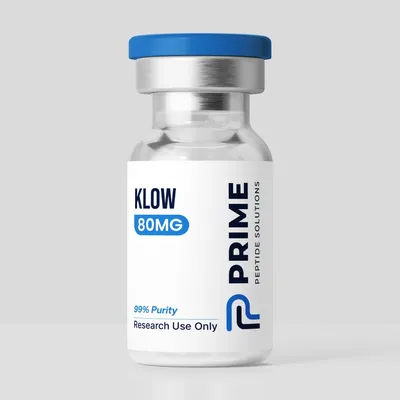
In our catalog these are listed as Melanotan II (MT-2), PT-141 and KPV, each a 10mg vial of lyophilized powder. KPV is also one of the four peptides in the KLOW blend, with GHK-Cu, BPC-157 and TB-500; see KLOW explained. Every batch of KLOW is tested by an independent third-party lab. The lab report (COA) is on our COAs page. The current KLOW report also has its own page: KLOW 80mg lab report.
Sold strictly for in-vitro laboratory research. Not for human or animal consumption.