

What is PT-141?
PT-141, also known as Bremelanotide, is a synthetic peptide that acts on the melanocortin receptor system. It is a metabolite-derived analog related to Melanotan II, and it is studied in research literature for its activity at melanocortin receptors, particularly the MC4 receptor.
Where Melanotan II engages a broad range of melanocortin receptors, PT-141 is associated with a narrower receptor focus. This shift in receptor emphasis is the central reason the two peptides, despite their close structural relationship, are studied in different research contexts.
This article is intended as a scientific overview for laboratory researchers. PT-141 is sold strictly for in-vitro research and is not for human consumption.
Background: The Melanocortin System
To understand PT-141 it helps to understand the receptor family it acts on.
The melanocortin receptors
The melanocortin system is a family of related receptors (MC1R through MC5R) with different tissue distributions and research associations. MC1R is associated with pigmentation pathways, while MC4R is associated with central nervous system signaling. Different melanocortin peptides engage these receptors to different degrees, which is what gives each compound its distinct research profile.
Relationship to Melanotan II
PT-141 is derived from Melanotan II. In structural terms the two are close relatives, but PT-141 is studied with a narrower emphasis on MC4R-associated central pathways rather than the broad receptor engagement that characterizes Melanotan II. This makes the pair a frequently cited example of how a structural derivative can shift a peptide's receptor profile.
Structure and Design
PT-141 is a cyclic heptapeptide. As a melanocortin analog it carries the structural features needed to bind melanocortin receptors, with modifications that distinguish its receptor selectivity from its parent compound. Its cyclic structure contributes to stability, which is relevant to its handling in a research setting.
Proposed Mechanism of Action
In research literature, PT-141 is examined primarily as an MC4 receptor agonist. The MC4 receptor is expressed in central nervous system regions studied in connection with a range of regulatory pathways. Because PT-141 acts centrally rather than through the peripheral vascular pathways associated with some other compounds, it occupies a distinct niche in melanocortin research. As with all peptides in this area, the published evidence is drawn from laboratory and animal models, and proposed mechanisms remain an active area of study.
Current Research Areas
PT-141 appears in research examining melanocortin receptor signaling, with a particular focus on MC4R-associated central pathways. It is also studied comparatively against its parent compound Melanotan II to understand how receptor selectivity changes between a broad-spectrum melanocortin agonist and a more focused one. Structure-activity research uses the pair to map how specific modifications influence which receptors a peptide engages.
Stability and Laboratory Handling
General Handling Considerations
PT-141 arrives lyophilized (freeze-dried) and is reconstituted with bacteriostatic water for research use. Lyophilized peptide should be stored cold and protected from light and moisture. Once reconstituted, it is typically kept refrigerated and used within a defined window, as reconstituted peptides are less stable than their dry form. Our reconstitution and stability guides cover the standard laboratory practices in detail.
Verifying Quality
As with any research peptide, identity and purity should be confirmed by a Certificate of Analysis backed by HPLC and mass spectrometry. Because PT-141 and Melanotan II are structurally related, analytical verification is particularly useful for confirming that material is the intended compound rather than a related analog.
Frequently Asked Research Questions
Is PT-141 the same as Bremelanotide?
Yes. PT-141 and Bremelanotide are two names for the same research peptide.
How does PT-141 differ from Melanotan II?
PT-141 is derived from Melanotan II but is studied with a narrower receptor emphasis, focused on MC4R-associated central pathways rather than the broad melanocortin engagement (including MC1R pigmentation pathways) that characterizes Melanotan II.
What receptor does PT-141 primarily act on?
In research literature, PT-141 is studied mainly as an MC4 receptor agonist.
Is PT-141 approved for human use?
PT-141 is sold by Prime Peptide Solutions strictly as a research compound for in-vitro laboratory study and is not for human consumption or in-vivo human use. Where an approved pharmaceutical formulation of a related compound exists, it is a separate, regulated product and is not equivalent to research material.
What purity should research-grade PT-141 have?
Research-grade material is generally specified at high purity verified by HPLC and confirmed by mass spectrometry, with the exact figure stated on a batch-specific Certificate of Analysis.
Conclusion
PT-141 (Bremelanotide) is a melanocortin receptor agonist closely related to Melanotan II but studied with a narrower focus on MC4R-associated central pathways. Its relationship to its parent compound makes it a useful case study in how receptor selectivity shifts with structural change. For laboratories, the practical considerations are its central receptor focus, its cyclic-peptide stability, and the importance of analytical verification given its structural similarity to related analogs.
Disclaimer: This article is provided for educational and research purposes only. Information contained herein is a summary of publicly available scientific literature and does not constitute medical advice. PT-141 and all peptide compounds sold by Prime Peptide Solutions are intended strictly for laboratory research and are not for human consumption, in-vivo human use, or therapeutic application. Researchers are responsible for compliance with all applicable regulations governing peptide use in their jurisdiction.
Shop PT-141
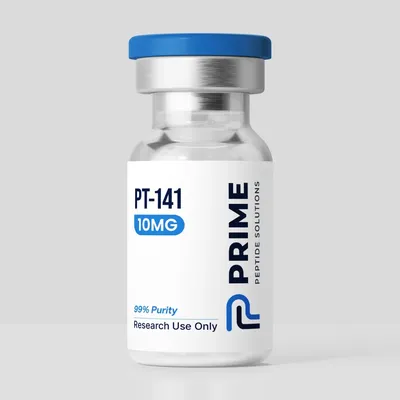
- Ships the same business day
- Free US shipping on $149.99+
- 7-day money-back guarantee on damaged items
References & Further Reading
- PubMed: Current peer-reviewed PT-141 / Bremelanotide literature
- PubMed: MC4 receptor research overview
- Related: Melanotan II: Mechanism of Action and Research Applications
- Related: Peptide Reconstitution Guide
- Tool: Peptide Reconstitution Calculator
- For batch-specific COAs, see our published Certificates of Analysis