

What is Melanotan II?
Melanotan II is a synthetic peptide analog of alpha-melanocyte-stimulating hormone (α-MSH), a naturally occurring hormone involved in pigmentation, appetite regulation, and other physiological functions in research models. The peptide was originally synthesized at the University of Arizona in the 1980s as part of research into melanocortin receptor biology.
Structurally, Melanotan II is a cyclic peptide significantly modified from native α-MSH to improve stability and potency at melanocortin receptors. Its design represents one of the earliest examples of rational peptide engineering — researchers analyzed the binding requirements of melanocortin receptors and produced a shortened, cyclized analog with enhanced research utility.
This article is intended as a scientific overview for laboratory researchers. All compounds discussed are sold strictly for in-vitro research and are not for human consumption.
Background: The Melanocortin System
Before discussing Melanotan II specifically, the underlying biology of the melanocortin system is useful background.
The melanocortin receptors
There are five known melanocortin receptors (MC1R through MC5R), each with distinct tissue distribution and proposed functions in research models:
- MC1R: Primarily expressed in melanocytes (pigment-producing cells). Studied for its role in pigmentation biology
- MC2R: Expressed in adrenal cortex. Studied for its role in steroid signaling
- MC3R: Expressed in hypothalamus and other central tissues. Studied for energy balance and inflammation
- MC4R: Expressed in hypothalamus and peripheral tissues. Studied for appetite and metabolic regulation
- MC5R: Expressed in exocrine glands. Studied for sebaceous gland function
Native α-MSH
Alpha-melanocyte-stimulating hormone is a 13-amino-acid peptide produced through proteolytic cleavage of a larger precursor protein (POMC). It activates multiple melanocortin receptors with varying affinity. Like most native peptide hormones, α-MSH has a very short biological half-life — minutes in circulation — limiting its research utility.
Structure and Design
Melanotan II's structure reflects systematic optimization for melanocortin receptor binding:
- Shortened sequence: 7 amino acids vs. native α-MSH's 13
- Cyclic structure: Linked at specific residues to create a ring, which locks the peptide into a receptor-binding conformation
- D-amino acid substitution: Includes D-phenylalanine, which resists enzymatic degradation
- Modified terminal residues: Various changes to enhance binding affinity and stability
Compared to α-MSH, Melanotan II has substantially extended biological half-life in research models — hours rather than minutes — making it practical for sustained receptor engagement studies.
Proposed Mechanism of Action
Melanotan II is a non-selective melanocortin receptor agonist, meaning it binds and activates multiple MC receptors rather than just one. Its activity profile in research models is characterized by:
- High affinity for MC1R, MC3R, MC4R, and MC5R — substantial activation of all four
- Limited activity at MC2R — which requires structural features not present in Melanotan II
- Receptor activation triggers downstream G protein-coupled signaling cascades, primarily through cAMP elevation
This non-selective profile makes Melanotan II a useful research tool for studying melanocortin signaling broadly, but limits its utility for studying any single receptor in isolation. Newer melanocortin research uses more selective agonists when subtype-specific studies are needed.
Current Research Areas
The published Melanotan II literature spans several research interest areas. The following list represents research interest areas in published literature — not validated therapeutic uses.
- Pigmentation biology: MC1R activation on melanocytes in animal models, examining melanin production pathways
- Appetite regulation research: Animal studies of MC4R-mediated effects on food intake
- Sexual function research: Preclinical studies of MC4R activation effects
- Inflammation models: MC3R activation has been studied in some inflammation research
- Energy homeostasis: Animal studies examining metabolic effects of broad melanocortin activation
- Receptor pharmacology: Used as a tool compound to study melanocortin receptor biology generally
Researchers can find primary sources via PubMed searches for "Melanotan II" or "melanocortin receptor".
It's important to note that Melanotan II has not been approved by the FDA or any major regulatory body for therapeutic use. It remains a research compound. A separate, more selective melanocortin agonist (Afamelanotide) has received approval for specific limited medical conditions, but Melanotan II itself is not an approved therapeutic.
Stability and Laboratory Handling
Melanotan II is typically supplied as a lyophilized powder. As a cyclic peptide with D-amino acid modifications, it is somewhat more stable than many linear peptides of similar size.
General Handling Considerations
- Lyophilized form storage: Refrigerated at 2-8°C is acceptable for short-term; frozen at -20°C is recommended for long-term storage
- Reconstitution: Bacteriostatic water for injection (BWFI) is the standard solvent. See our peptide reconstitution guide for technique
- Reconstituted shelf-life: Generally stable for 2-4 weeks under refrigeration. As with all peptides, avoid repeated freeze-thaw cycles
- Light sensitivity: Standard precautions — protect reconstituted solutions from prolonged light exposure
- Cyclic stability: The cyclic structure provides some protection against linear degradation pathways, but oxidation of sensitive residues remains a concern
Verifying Quality
Research-grade Melanotan II should ship with a batch-specific Certificate of Analysis documenting:
- Purity by HPLC (greater than 99% is the industry research standard)
- Identity confirmation by mass spectrometry
- Confirmation of the cyclic structure and D-amino acid composition
For more on how peptide quality is verified analytically, see our guide on HPLC and Mass Spectrometry. View our published third-party COAs for examples of proper documentation.
Frequently Asked Research Questions
What's the difference between Melanotan I and Melanotan II?
Both are synthetic α-MSH analogs developed at the University of Arizona. Melanotan I (Afamelanotide) is a linear peptide with selective MC1R activity, primarily studied for pigmentation research. Melanotan II is a cyclic peptide with broader melanocortin receptor activation, including significant MC3R, MC4R, and MC5R activity. The different receptor profiles produce different research applications.
Why is Melanotan II non-selective?
Non-selectivity was not a design goal but a consequence of the early-1980s state of melanocortin research. At the time, the distinct receptor subtypes weren't yet fully characterized, so optimization focused on overall melanocortin activity rather than subtype selectivity. Modern peptide design enables much more selective compounds, but Melanotan II remains widely used because of its established research history.
Is Melanotan II approved for human use?
No. Melanotan II has not been approved by the FDA or any major regulatory body. It remains a research compound. The related compound Afamelanotide (Melanotan I) has received limited approval for specific rare medical conditions, but the two are different molecules. Materials sold by Prime Peptide Solutions are explicitly for laboratory research only.
What purity should research-grade Melanotan II have?
Research-grade Melanotan II should be characterized at greater than 99% purity by HPLC, with identity confirmed by mass spectrometry. The COA should document batch-specific values rather than only stating minimum specifications. Because of the cyclic structure and D-amino acid composition, mass spec verification is particularly important to confirm the correct compound is present.
Does the cyclic structure affect handling?
The cyclic structure provides some resistance to enzymatic degradation that linear peptides face, but it doesn't eliminate degradation entirely. Standard handling practices for research peptides (proper reconstitution, refrigerated storage, avoiding freeze-thaw cycles) still apply.
Conclusion
Melanotan II is a foundational research peptide in the melanocortin field — one of the earliest examples of rational peptide design and a tool that helped characterize melanocortin receptor biology. Its non-selective activation profile makes it useful for studying broad melanocortin signaling, though more selective compounds may be preferred for subtype-specific research questions.
For researchers working with Melanotan II, sourcing from suppliers who provide third-party verified Certificates of Analysis is essential for experimental reproducibility. The cyclic structure and D-amino acid composition make analytical verification particularly important.
Disclaimer: This article is provided for educational and research purposes only. Information contained herein is a summary of publicly available scientific literature and does not constitute medical advice. Melanotan II and all peptide compounds sold by Prime Peptide Solutions are intended strictly for laboratory research and are not for human consumption, in-vivo human use, or therapeutic application. Researchers are responsible for compliance with all applicable regulations governing peptide use in their jurisdiction.
Shop Melanotan II (MT-2)
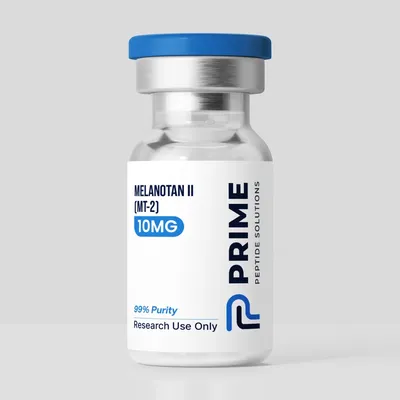
- Ships the same business day
- Free US shipping on $199.99+
- 14-day money-back guarantee on damaged items
References & Further Reading
- PubMed: Current peer-reviewed Melanotan II literature
- PubMed: Melanocortin receptor research overview
- Hadley, M.E. and Hruby, V.J. — Foundational work on melanocortin peptides (University of Arizona, 1980s)
- Related: Peptide Reconstitution Guide
- Related: Understanding HPLC and Mass Spec
- For batch-specific COAs, see our published Certificates of Analysis
- Product: Melanotan II