

What Is the Wolverine Blend?
Wolverine is our catalog name for the pairing of two research peptides, BPC-157 and TB-500, supplied together under a single listing. The name is a catalog label only, not scientific nomenclature.
The two peptides have different origins. BPC-157 is a 15-residue partial sequence of a larger protein first isolated from human gastric juice. TB-500 is typically a shorter synthetic fragment of the 43-amino-acid thymosin beta-4. They are often discussed together because their literatures describe largely distinct molecular pathways: VEGFR2, nitric-oxide and FAK-paxillin signaling and growth hormone receptor expression for BPC-157, and G-actin sequestration and endothelial cell migration for thymosin beta-4, all in cell and animal models.
This article is a scientific overview for laboratory researchers. The Wolverine blend, BPC-157 and TB-500 supplied by Prime Peptide Solutions are sold strictly for in-vitro laboratory research. They are not approved for human use and are not for human or animal consumption.
BPC-157 and TB-500 at a Glance
BPC-157
BPC-157 is a linear pentadecapeptide, described in the literature as a partial sequence of a protein isolated from gastric juice. Identity data from PubChem:
- Sequence: Gly-Glu-Pro-Pro-Pro-Gly-Lys-Pro-Ala-Asp-Asp-Ala-Gly-Leu-Val (H-GEPPPGKPADDAGLV-OH)
- Molecular formula: C62H98N16O22
- Molecular weight: 1419.5 g/mol
- CAS number: 137525-51-0
TB-500 and thymosin beta-4
Full-length thymosin beta-4 is the natural protein, while TB-500 is typically a shorter synthetic fragment containing the bioactive sequence. The names are often used interchangeably, but they are not the same molecule. The parent protein:
- Length: 43 residues. UniProt lists it as encoded as 44, with the initiator methionine removed and an N-acetylserine at the start of the mature chain.
- Size: about 5 kDa
- Early sequence work: a 1981 study sequenced bovine thymosin beta-4, one of several calf-thymus peptides in "thymosin fraction 5"
- Function (UniProt): "Binds to and sequesters actin monomers (G actin) and therefore inhibits actin polymerization."
Direct data on TB-500 itself are sparse. A 2024 analytical-chemistry study notes that the functions reported for the TB-500 sequence, such as actin binding and angiogenesis, trace to the active site of thymosin beta-4 from which it is derived, and that "the biological effects of TB-500, however, have not been documented." The mechanism findings below are therefore attributed to thymosin beta-4 research.
Distinct Mechanisms in Cell and Animal Models
The case for studying the two side by side is that they enter cell signaling at different points.
BPC-157: VEGFR2 and angiogenesis signaling
BPC-157 increased vessel density in a chick chorioallantoic membrane (CAM) assay in vivo and an endothelial tube formation assay in vitro. In human vascular endothelial cells it raised VEGFR2 mRNA and protein expression, but not VEGF-A, promoted VEGFR2 internalization and time-dependently activated the VEGFR2-Akt-eNOS pathway. The endocytosis inhibitor dynasore suppressed both effects. Vascular VEGFR2 expression also rose in a rat hind-limb model.
BPC-157: nitric oxide and Src-Caveolin-1-eNOS
In isolated rat aorta, BPC-157 produced concentration-dependent vasodilation that was attenuated without endothelium and inhibited by L-NAME or hemoglobin, pointing to an endothelium-dependent, nitric-oxide-mediated effect. In vascular endothelial cells it induced NO generation capable of promoting their migration. It enhanced phosphorylation of Src, Caveolin-1 and eNOS (abolished by a Src inhibitor) and reduced Caveolin-1/eNOS binding. The authors conclude NO generation is "likely" driven by a Src-Caveolin-1-eNOS pathway.
BPC-157: FAK-paxillin and fibroblast migration
In fibroblasts cultured from rat Achilles tendon, BPC-157 did not directly change proliferation (MTT assay). It increased survival under hydrogen peroxide stress, raised transwell migration and cell spreading in a concentration-dependent way, and induced F-actin formation. FAK and paxillin phosphorylation rose while total protein stayed unchanged, and the authors conclude the effect is "likely mediated by the activation of the FAK-paxillin pathway."
BPC-157: growth hormone receptor expression
A cDNA microarray identified the growth hormone receptor as one of the most up-regulated genes in rat tendon fibroblasts exposed to BPC-157, and receptor mRNA and protein rose in a concentration- and time-dependent way. When growth hormone was added, the downstream kinase JAK2 was activated over time. These data concern receptor expression in cultured cells, not growth hormone levels.
Thymosin beta-4: G-actin sequestration
Thymosin beta-4 is indistinguishable from "Fx", the actin-sequestering peptide of human platelets. It forms a 1:1 complex with actin monomers and inhibits polymerization. In resting human platelets much of the actin is unpolymerized, and the bulk of it is complexed with this peptide. Later work calls it the most abundant beta-thymosin in mammalian tissue and "the main G-actin sequestering peptide".
Thymosin beta-4: endothelial cell migration
Thymosin beta-4 acted as a chemoattractant for endothelial cells, stimulating human umbilical vein endothelial cell migration in Boyden chambers above the level seen with media alone. It accelerated migration into a scratched endothelial monolayer, increased matrix metalloproteinase production and stimulated migration in an implanted basement-membrane matrix assay in vivo. The activity appeared endothelial cell-specific.
A seven-amino-acid actin-binding motif was essential for its angiogenic activity. In endothelial migration and chick aortic-arch sprouting assays, full-length thymosin beta-4 and the motif alone showed near-identical activity, peptides lacking any part of the motif were inactive, and added soluble actin inhibited thymosin beta-4's adhesion and sprouting activity.
Thymosin beta-4: PINCH-ILK-Akt signaling
In the embryonic heart, thymosin beta-4 promoted myocardial and endothelial cell migration, and the same study found that it "formed a functional complex with PINCH and integrin-linked kinase (ILK), resulting in activation of the survival kinase Akt". The Akt link is not uniform across studies. In human hepatic stellate cells stimulated with PDGF-BB, a thymosin beta-4-derived peptide covering residues 17-23 blunted Akt phosphorylation at T308 and S473 and inhibited proliferation and migration, while a residue 1-15 peptide blocked only S473 phosphorylation and had no effect on either.
Where the two literatures meet
The BPC-157 findings summarized here concern receptor expression and kinase signaling (VEGFR2, eNOS, FAK-paxillin, growth hormone receptor); the thymosin beta-4 findings summarized here center on G-actin binding and on endothelial cell migration that depended on its actin-binding motif. Both literatures also report endothelial readouts: BPC-157 increased vessel density and tube formation and induced NO that promoted endothelial cell migration, while thymosin beta-4 stimulated endothelial cell migration and aortic sprouting. Both report Akt among downstream kinases (VEGFR2-Akt-eNOS for BPC-157 in endothelial cells, PINCH-ILK-Akt for thymosin beta-4 in heart cells), but no study found so far has tested whether that overlap matters in combination.
What direct combination research shows
Direct combination data are scarce. A PubMed title and abstract search pairing BPC-157 with thymosin beta-4 or TB-500, run in September 2026, returns about a dozen records, mostly reviews. The one direct animal comparison found is an exploratory 2026 rat study with four groups: control, BPC-157, TB-500 and the two combined. The authors reported that the combination group showed no additional difference compared with either single-peptide group, and suggested that this "may reflect convergence on shared downstream pathways; however, this hypothesis requires further experimental confirmation." Combination research remains preliminary.
Vial Format and Laboratory Handling
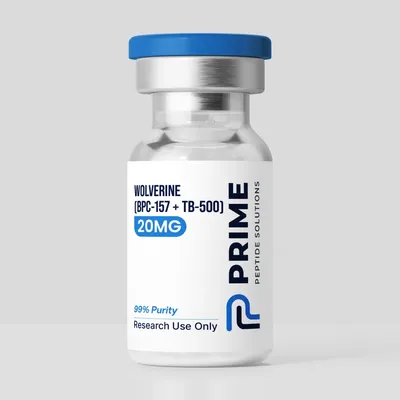
The Wolverine listing is one lyophilized vial in which BPC-157 and TB-500 are pre-mixed, with 20mg of total peptide. It is not two separate vials. The per-component split is stated on the vial label and the batch Certificate of Analysis and should be taken from there, not assumed.
Reconstituting a pre-mixed vial
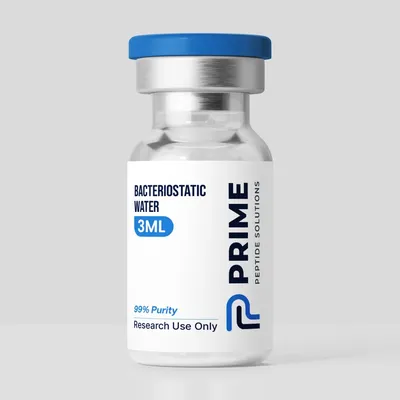
Both peptides share one vial, so reconstitution produces one shared solution with a single diluent volume. The vial is reconstituted as a whole, typically with bacteriostatic water (0.9% benzyl alcohol in sterile water), sold separately. Our peptide reconstitution guide covers general technique; the solution is swirled gently, not shaken. Once reconstituted, it is kept at 2–8 °C, protected from light, and not repeatedly frozen and thawed; see our peptide storage guide.
Verifying the contents
The product page cites HPLC and mass spectrometry testing. At the time of writing, our COA library lists one certificate titled "Wolverine (BPC-157 + TB-500)", reporting 99.509% purity from testing on May 29, 2026. It is a product-level certificate for the blended vial, not a purity figure for each component.
Pre-mixed vial or single-peptide vials
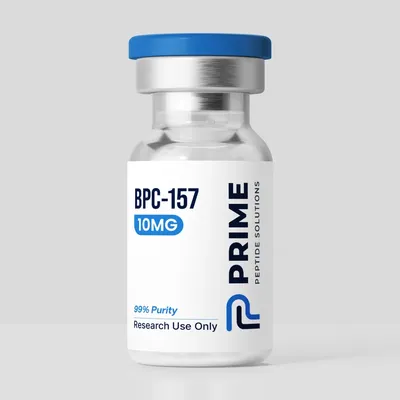
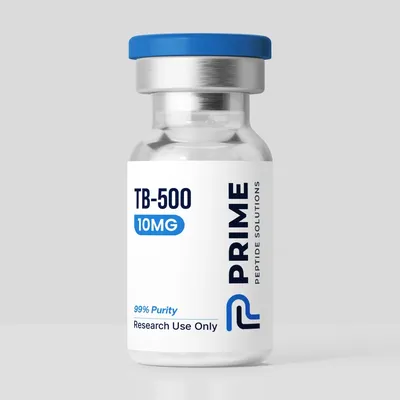
BPC-157 and TB-500 are also listed individually as 10mg lyophilized vials. For in-vitro designs that compare each peptide alone with the pair, note that a pre-mixed vial supplies only the combination; single-peptide conditions use the standalone BPC-157 and TB-500 vials.
Frequently Asked Research Questions
Has the combination been compared with each peptide alone?
In one exploratory rodent study, yes. It reported no additional difference between the combination and either peptide alone, and the shared-pathway explanation offered by the authors is an untested hypothesis. The published mechanisms for BPC-157 and for thymosin beta-4, TB-500's parent protein, are largely distinct.
Is TB-500 the same as thymosin beta-4?
No. Thymosin beta-4 is a natural 43-amino-acid protein of about 5 kDa; TB-500 is typically a shorter synthetic fragment of it. Most mechanism data come from thymosin beta-4 research.
Is the Wolverine listing one vial or two?
One. BPC-157 and TB-500 are pre-mixed in a single lyophilized vial with 20mg of total peptide. The vial label and batch COA state the composition.
Is Wolverine approved for human use?
No. The Wolverine blend, BPC-157 and TB-500 sold by Prime Peptide Solutions are not approved for human use. They are supplied only for in-vitro laboratory research and are not for human or animal consumption.
Conclusion
BPC-157 and TB-500 are paired because their literatures point to different pathways. BPC-157 work in cell and animal models covers VEGFR2-Akt-eNOS and Src-Caveolin-1-eNOS signaling, FAK-paxillin-linked migration and growth hormone receptor expression. The mechanism data behind TB-500 come from thymosin beta-4 and center on G-actin sequestration and endothelial cell migration. Direct combination data are limited, and the one exploratory rat study reported no additional difference between the combination and either peptide alone. In our catalog, Wolverine is a single pre-mixed 20mg vial whose split is documented on the label and COA.
Disclaimer: This article is provided for educational and research purposes only. It summarizes publicly available scientific literature and does not constitute medical advice. BPC-157, TB-500, the Wolverine blend and all peptide compounds sold by Prime Peptide Solutions are intended strictly for laboratory research, are not approved for human use, and are not for human or animal consumption. Researchers are responsible for compliance with all applicable regulations in their jurisdiction.
Shop these products
- Ships the same business day
- Free US shipping on $199.99+
- 14-day money-back guarantee on damaged items
References & Further Reading
- PubMed: Current peer-reviewed BPC-157 literature
- PubMed: BPC-157 and VEGFR2 signaling
- PubMed: BPC-157, nitric oxide and eNOS
- PubMed: BPC-157 and the FAK-paxillin pathway
- PubMed: Thymosin beta-4 and G-actin sequestration
- PubMed: Thymosin beta-4 and endothelial cell migration
Research-Grade Wolverine (BPC-157 + TB-500)
In our catalog, the pairing is listed as Wolverine (BPC-157 + TB-500): BPC-157 and TB-500 pre-mixed in one sealed vial of lyophilized powder, 20mg total, with bacteriostatic water sold separately. The vial is stored at 2–8 °C, or −20 °C long-term, and kept refrigerated after reconstitution. The component split is given on the vial label and the batch Certificate of Analysis, published on our COA page.
Sold strictly for in-vitro laboratory research. Not for human or animal consumption.