
TB-500 vs GHK-Cu: Actin-Binding Peptide vs Copper-Binding Tripeptide
TB-500 and GHK-Cu are both discussed in tissue-repair research, which is why they are often grouped together, but they are unrelated molecules that act through different chemistry. TB-500 is a synthetic peptide associated with thymosin beta-4 (Tβ4), a 43-residue, roughly 5 kDa polypeptide best known as the main G-actin-sequestering peptide in mammalian cells (Philp et al., 2003). GHK-Cu is the copper(II) complex of glycyl-L-histidyl-L-lysine, a tripeptide first reported in human serum by Loren Pickart in 1973 (Pickart & Thaler, 1973).
Put simply, the Tβ4 literature is about actin dynamics and cell migration, and the GHK literature is about copper binding, extracellular-matrix remodeling and gene-expression signatures. This page compares the catalog items TB-500 and GHK-Cu on structure, mechanisms reported in cell and animal models, typical assays, and laboratory handling.
Both are sold strictly for in-vitro laboratory research. They are not approved for human use and are not for human or animal consumption.
| Property | TB-500 / thymosin beta-4 | GHK-Cu |
|---|---|---|
| Compound class | Synthetic peptide tied to the β-thymosin family | Tripeptide-copper(II) coordination complex |
| Parent molecule | Tβ4: 43 residues, about 4.9 kDa, N-terminally acetylated | GHK: Gly-His-Lys, 3 residues |
| What the name denotes | Not standardized: used for full-length synthetic Tβ4 or for the acetylated actin-binding fragment Ac-LKKTETQ (Tβ4 17-23, about 889 g/mol calculated) | GHK with one bound Cu(II); about 340 g/mol for GHK, roughly 400 g/mol for the 1:1 complex depending on salt form |
| Core activity studied | 1:1 binding of G-actin, inhibiting actin polymerization | High-affinity Cu(II) binding; proposed copper delivery to cells |
| Main research themes | Endothelial and keratinocyte migration, angiogenesis, cardiac and dermal repair models | Collagen and glycosaminoglycan synthesis, MMP/TIMP balance, gene-expression signatures |
| Typical assays | Boyden chamber, scratch wound, tube formation, aortic ring sprouting, Matrigel plug | Fibroblast collagen synthesis, potentiometric and visible-absorption copper studies, transcriptomic comparisons |
| Appearance | White lyophilized powder; colorless in solution | Blue to violet-blue powder and solution (Cu(II) chromophore) |
| Key handling concern | Peptide hydrolysis, adsorption, freeze-thaw; confirm identity by mass | pH-dependent copper speciation; avoid chelators and strong reducing agents |
| Listed sizes | 10mg | 50mg, 100mg |
About TB-500 (thymosin beta-4 and its actin-binding region)
What the name covers. Thymosin beta-4 was first isolated from calf thymus and was long thought to be a thymic hormone. In 1991, Safer and colleagues showed that it is identical to Fx, the acidic 5 kDa peptide that holds much of the unpolymerized actin in resting human platelets. It forms a 1:1 complex with actin monomers and inhibits polymerization (Safer et al., 1991). "TB-500" is a trade name, not a defined chemical entity. Suppliers use it for synthetic full-length Tβ4 and for short fragments built around the actin-binding motif, most often the N-acetylated heptapeptide Ac-LKKTETQ. Those two materials differ roughly sixfold in mass (about 4.9 kDa versus about 0.89 kDa), so the mass-spectrometry result on the batch Certificate of Analysis is the way to confirm which one a vial contains.
Why the fragment exists. Philp and colleagues compared native Tβ4, proteolytic fragments and synthetic peptides. They found that the seven-residue actin-binding motif was essential for angiogenic activity. In HUVEC migration and chick aortic arch sprouting assays, full-length Tβ4 and the motif peptide showed near-identical activity at about 50 nM, and peptides missing any part of the motif were inactive. Adding 5-50 nM soluble actin inhibited adhesion and sprouting (Philp et al., 2003). That study supports the idea that the fragment reproduces specific activities of Tβ4. It does not show that the fragment matches every activity reported for the full-length peptide.
Migration and angiogenesis. Tβ4 acted as a chemoattractant for endothelial cells, raising HUVEC migration four- to sixfold in Boyden chambers. It also accelerated closure of scratch wounds, increased matrix metalloproteinase production, and stimulated cell migration into implanted Matrigel in vivo (Malinda et al., 1997). In a rat full-thickness wound model, topical or intraperitoneal Tβ4 increased reepithelialization by 42% over saline controls at day 4 and by up to 61% at day 7, with more collagen deposition and angiogenesis. Keratinocyte migration rose two- to threefold in the Boyden chamber (Malinda et al., 1999).
Intracellular signaling. In embryonic and postnatal cardiomyocytes, Tβ4 formed a complex with PINCH and integrin-linked kinase (ILK), which activated Akt, and it improved cardiomyocyte survival in culture. After coronary artery ligation in mice, the authors reported higher ILK and Akt activity and better cardiac function (Bock-Marquette et al., 2004). A 2012 review by Goldstein and colleagues summarizes the wider Tβ4 literature on cell migration, progenitor-cell mobilization, myofibroblast reduction and repair in skin, eye, heart and brain models (Goldstein et al., 2012). Note that all of these findings come from Tβ4 or defined fragments in the cited studies, not from commercial "TB-500" lots. For how TB-500 relates to native Tβ4, see TB-500 vs thymosin beta-4.
About GHK-Cu (a copper-binding tripeptide)
Origin. Pickart and Thaler reported in 1973 that a tripeptide in human serum prolonged survival of normal liver cells and stimulated growth in neoplastic liver cells (Pickart & Thaler, 1973). Later reviews describe the activity as one that made old human liver tissue synthesize proteins like younger tissue. GHK has high affinity for copper ions and readily forms the GHK-Cu complex (Pickart et al., 2012). GHK has been measured in human plasma, saliva and urine, and its levels fall with age (Pickart et al., 2015).
Copper chemistry. Lau and Sarkar studied Cu(II) and GHK by potentiometric titration and visible-absorption spectrophotometry. Between pH 3.5 and 10.6 they found several complex species in solution, and the lysine epsilon-amino group raised the stability constants compared with Gly-His or Gly-His-Gly. In equilibrium dialysis at pH 7.5, GHK competed with albumin for Cu(II): at equimolar albumin and peptide, about 42% of the copper was bound to the peptide. The authors discussed a possible role for these complexes in moving copper from blood to tissues (Lau & Sarkar, 1981). That copper-transport idea is the core of the GHK-Cu mechanism, and it has nothing in common with actin sequestration.
Matrix remodeling. In fibroblast cultures, GHK-Cu stimulated collagen synthesis. The effect started between 1 and 10 pM (10^-12 to 10^-11 M), peaked at 1 nM (10^-9 M) and did not depend on a change in cell number. The authors noted that a GHK triplet occurs in the alpha-2(I) chain of type I collagen, which suggests the tripeptide could be released by proteases at a wound site (Maquart et al., 1988). Reviews from Pickart's group report that GHK stimulates both synthesis and breakdown of collagen and glycosaminoglycans and modulates metalloproteinases and their inhibitors (Pickart et al., 2015).
Gene-expression data. Using gene-expression datasets, Pickart's group reported that GHK can raise or lower the expression of at least 4,000 human genes (Pickart et al., 2015). Their 2018 review uses these data to link GHK to pathways involved in tissue repair, NFκB suppression, DNA repair and proteasome activity (Pickart & Margolina, 2018). These are transcriptomic associations interpreted by the compound's main investigators, so they are best treated as hypotheses to test. For a broader overview, see the GHK-Cu scientific overview.
Which Should Researchers Choose?
The two compounds answer different questions. TB-500 belongs in studies of the cytoskeleton and cell motility. GHK-Cu belongs in studies of copper biology and extracellular-matrix turnover. The choice follows the laboratory question:
- Actin dynamics and G-actin sequestration: TB-500, if a batch is confirmed as full-length Tβ4. Polymerization assays and native gel shifts with G-actin follow the 1:1 complex described by Safer and colleagues.
- Endothelial migration and angiogenesis assays: TB-500 fits Boyden chamber, scratch wound, tube formation and aortic ring sprouting work. Use full-length Tβ4 or the Ac-LKKTETQ fragment depending on whether the question is about the whole molecule or the actin-binding motif.
- Copper delivery and coordination chemistry: GHK-Cu, including speciation, competition with albumin and comparisons with copper-free GHK as a control.
- Collagen synthesis and ECM remodeling: GHK-Cu fits fibroblast collagen, glycosaminoglycan and MMP/TIMP readouts across the very low concentration range reported by Maquart and colleagues.
- Transcriptomic studies: GHK-Cu has the larger published gene-expression literature.
- Other pairings: BPC-157 vs TB-500 and GHK-Cu vs KPV compare each compound with a different partner.
They are compared here as separate reagents for separate experimental questions.
Frequently Asked Questions
Is TB-500 the same as thymosin beta-4?
Not necessarily. Thymosin beta-4 is a defined 43-residue peptide. "TB-500" is a market name that suppliers apply either to synthetic full-length Tβ4 or to the acetylated actin-binding fragment Ac-LKKTETQ. Check the molecular mass reported on the batch Certificate of Analysis on the COA page to see which one a lot contains (about 4.9 kDa versus about 0.89 kDa).
Do TB-500 and GHK-Cu share a mechanism?
No shared mechanism is reported in the sources reviewed here. Tβ4 binds G-actin and its actin-binding motif is required for its angiogenic activity in cell assays. GHK-Cu is defined by copper coordination and is studied for copper transport, collagen synthesis and gene-expression changes. Both appear in wound-model literature, but through separate pathways.
Why is GHK-Cu blue?
The color comes from the Cu(II) ion bound to the peptide, which absorbs in the visible range. Lau and Sarkar used that visible absorption, together with potentiometric titration, to characterize the complex species. A clear shift in color or a precipitate after reconstitution can point to a change in copper speciation or contamination and is worth checking before use in an assay. TB-500 has no chromophore of this kind and gives a colorless solution.
How do handling concerns differ?
Both are supplied lyophilized and are best stored cold, dry and protected from light (see the peptide storage guide). With GHK-Cu, also keep in mind that copper binding depends on pH, so strongly acidic buffers, chelators such as EDTA, and strong reducing agents can strip or change the copper. With TB-500, the usual peptide concerns apply: hydrolysis in solution, adsorption to surfaces at low concentration, and repeated freeze-thaw. Vial-specific steps for GHK-Cu are in how to reconstitute GHK-Cu 50mg and 100mg vials.
Can the two be compared in the same assay?
Yes, as separate arms with suitable controls. In a fibroblast or endothelial scratch assay, for example, copper-free GHK and copper salt alone help separate copper effects from peptide effects, and a scrambled heptapeptide is a common control for the actin-binding motif. Run the arms as parallel conditions rather than as a combination unless interaction is the actual question.
Are these approved for human use?
No. Both are sold strictly for in-vitro laboratory research, are not approved for human use and are not for human or animal consumption. Batch Certificates of Analysis are published on the COA page.
Shop these products
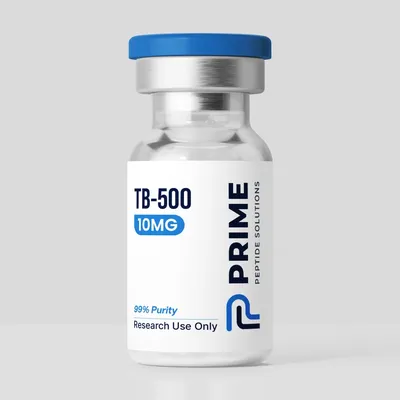
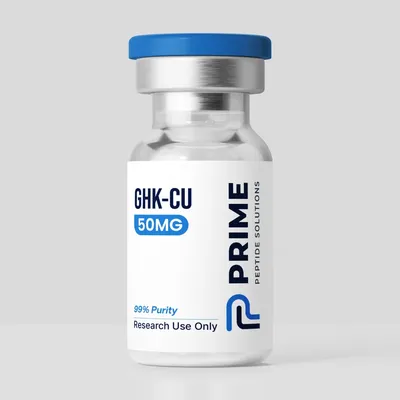
- Ships the same business day
- Free US shipping on $149.99+
- 7-day money-back guarantee on damaged items