

What Is This Reference Table?
This page is a single reference table of identity data for the research compounds in the Prime Peptide Solutions catalog: sequence (for peptides of 16 residues or fewer), molecular formula, molecular weight, CAS number and PubChem compound ID. It works as a peptide molecular weight chart and a peptide CAS number list in one place, with one row per product listed here and the components listed for each blend.
Each value was checked against the PubChem record for its CAS number, and the PubChem links are given so any figure can be checked again (Kim et al., 2025). Where a value could not be confirmed, the cell says so instead of guessing. The table holds identity data only: there are no half-life, amount or use columns.
This article is a scientific overview for laboratory researchers. The research-grade peptides and research compounds supplied by Prime Peptide Solutions are sold strictly for in-vitro laboratory research. They are not approved for human use and are not for human or animal consumption.
How to Read the Table
- Sequence. Three-letter amino-acid codes from the N-terminus. "H-" marks a free N-terminal amine and "-OH" a free C-terminal acid; "Ac-" is an acetyl cap and "-NH2" a C-terminal amide. Peptides longer than 16 residues show their length instead.
- Nonstandard residues. D- marks a D-amino acid. Aib is 2-aminoisobutyric acid, D-2Nal is 3-(2-naphthyl)-D-alanine, Nle is norleucine, Dmt is 2,6-dimethyl-L-tyrosine, and γGlu (gamma-Glu) means the glutamate is linked through its side-chain carboxyl.
- Formula and MW. The molecular formula and the average molecular weight in g/mol, as PubChem computes them for the compound with that CAS number. That is usually the free peptide, not an acetate or trifluoroacetate salt.
- CAS and PubChem. The CAS registry number shown on the product page and the PubChem compound ID (CID), linked to its record.
Search spellings vary. GHK-Cu also appears as GHKCu, AOD-9604 as AOD9604, IGF-1 LR3 as IGF1 LR3, SS-31 as SS31, Epithalon as Epitalon, and Thymosin Alpha-1 as thymosin alpha 1. The rows are the same compounds.
Short Peptides (3 to 9 Residues)
Wide table: on a phone, swipe it sideways to see every column →
| Product | Sequence or length | Formula and MW | CAS and PubChem |
|---|---|---|---|
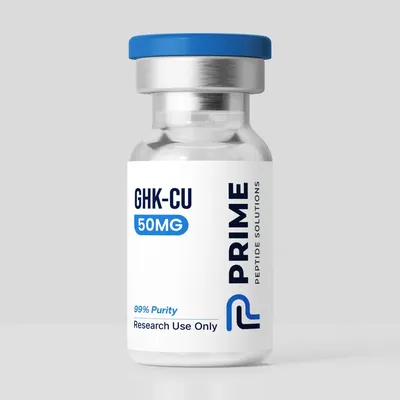
| GHK-Cu | Gly-His-Lys, copper(II) complex (1:1) | C14H23CuN6O4+ 402.92 g/mol (copper complex, +1 charge) | 89030-95-5 CID 71587328 |
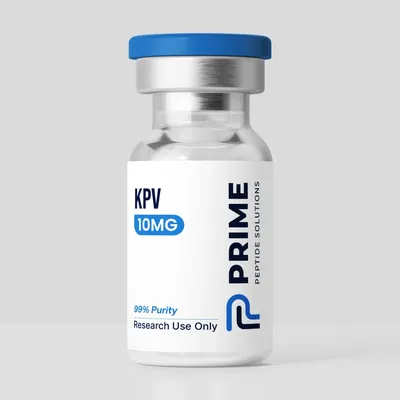
| KPV | H-Lys-Pro-Val-OH | C16H30N4O4 342.43 g/mol | 67727-97-3 CID 125672 |
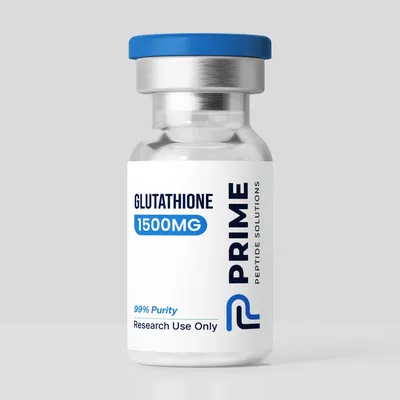
| Glutathione | H-γGlu-Cys-Gly-OH (reduced form) Tripeptide with a gamma-glutamyl link | C10H17N3O6S 307.33 g/mol | 70-18-8 CID 124886 |
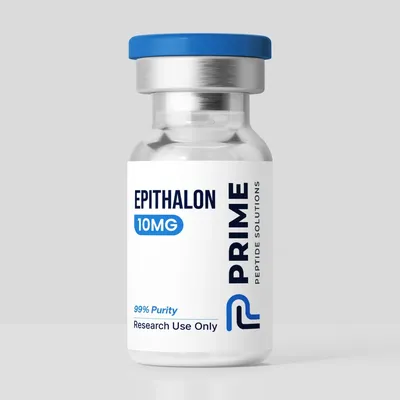
| Epithalon | H-Ala-Glu-Asp-Gly-OH | C14H22N4O9 390.35 g/mol | 307297-39-8 CID 219042 |
| SS-31 | H-D-Arg-Dmt-Lys-Phe-NH2 (Dmt = 2,6-dimethyl-L-tyrosine) Tetrapeptide amide | C32H49N9O5 639.8 g/mol | 736992-21-5 CID 11764719 |
| Ipamorelin | H-Aib-His-D-2Nal-D-Phe-Lys-NH2 | C38H49N9O5 711.9 g/mol | 170851-70-4 CID 9831659 |
| TB-500 | Ac-Leu-Lys-Lys-Thr-Glu-Thr-Gln-OH | C38H68N10O14 889.0 g/mol | 885340-08-9 CID 62707662 |
| Selank | H-Thr-Lys-Pro-Arg-Pro-Gly-Pro-OH | C33H57N11O9 751.9 g/mol | 129954-34-3 CID 11765600 |
| Semax | H-Met-Glu-His-Phe-Pro-Gly-Pro-OH | C37H51N9O10S 813.9 g/mol | 80714-61-0 CID 9811102 |
| Melanotan II (MT-2) | Ac-Nle-cyclo[Asp-His-D-Phe-Arg-Trp-Lys]-NH2 Cyclic heptapeptide | C50H69N15O9 1024.2 g/mol | 121062-08-6 CID 92432 |
| PT-141 | Ac-Nle-cyclo[Asp-His-D-Phe-Arg-Trp-Lys]-OH Cyclic heptapeptide | C50H68N14O10 1025.2 g/mol | 189691-06-3 CID 9941379 |
| DSIP | H-Trp-Ala-Gly-Gly-Asp-Ala-Ser-Gly-Glu-OH | C35H48N10O15 848.8 g/mol | 62568-57-4 CID 68816 |
Longer Peptides and Proteins
Wide table: on a phone, swipe it sideways to see every column →
| Product | Sequence or length | Formula and MW | CAS and PubChem |
|---|---|---|---|
| BPC-157 | H-Gly-Glu-Pro-Pro-Pro-Gly-Lys-Pro-Ala-Asp-Asp-Ala-Gly-Leu-Val-OH | C62H98N16O22 1419.5 g/mol | 137525-51-0 CID 9941957 |
| AOD-9604 | H-Tyr-Leu-Arg-Ile-Val-Gln-Cys-Arg-Ser-Val-Glu-Gly-Ser-Cys-Gly-Phe-OH (disulfide Cys7–Cys14) | C78H123N23O23S2 1815.1 g/mol | 221231-10-3 CID 71300630 |
| MOTS-C | H-Met-Arg-Trp-Gln-Glu-Met-Gly-Tyr-Ile-Phe-Tyr-Pro-Arg-Lys-Leu-Arg-OH | C101H152N28O22S2 2174.6 g/mol | 1627580-64-6 CID 146675088 |
| Thymosin Alpha-1 | 28 residues | C129H215N33O55 3108.3 g/mol | 62304-98-7 CID 16130571 |
| CJC-1295 NO DAC | 29 residues | C152H252N44O42 3367.9 g/mol | 863288-34-0 CID 56841945 |
| Tesamorelin | 44 residues | C221H366N72O67S 5136 g/mol | 218949-48-5 CID 16137828 |
| IGF-1 LR3 | 83 residues; recombinant protein | No PubChem compound record | 143045-27-6 CAS via FDA GSRS |
IGF-1 LR3 is a recombinant protein, so PubChem has no compound record with a formula or weight for it; its CAS number and length come from the FDA Global Substance Registration System (UNII M9L22Y19H9). The 83 residues are IGF-I with arginine in place of glutamate at position 3, plus a 13-residue N-terminal extension made of the first 11 residues of methionyl porcine growth hormone followed by Val-Asn. The original paper called this analog Long [Arg3]-IGF-I (Francis et al., 1992).
Non-Peptide Research Compounds
Wide table: on a phone, swipe it sideways to see every column →
| Product | Sequence or length | Formula and MW | CAS and PubChem |
|---|---|---|---|
| NAD+ | Dinucleotide (oxidized form); not a peptide | C21H27N7O14P2 663.4 g/mol | 53-84-9 CID 5892 |
| 5-Amino-1MQ | Small molecule, iodide salt; not a peptide | C10H11IN2 286.11 g/mol | 42464-96-0 CID 66522933 |
| Slu-PP-332 | Small molecule; not a peptide | C18H14N2O2 290.3 g/mol | 303760-60-3 CID 5338394 |
NAD+ is a dinucleotide coenzyme, and 5-Amino-1MQ and Slu-PP-332 are small organic molecules. They are listed here because they are in the catalog, but none contains a peptide bond. The 5-Amino-1MQ entry is the iodide salt, which is why iodine appears in its formula.
Blends: Components and Their Identity Data
Wide table: on a phone, swipe it sideways to see every column →
| Blend | Components | Component identity data |
|---|---|---|
| Wolverine (BPC-157 + TB-500) | BPC-157 + TB-500 | BPC-157: C62H98N16O22, 1419.5 g/mol, CAS 137525-51-0 TB-500: C38H68N10O14, 889.0 g/mol, CAS 885340-08-9 |
| KLOW | GHK-Cu + KPV + BPC-157 + TB-500 | GHK-Cu: C14H23CuN6O4+, 402.92 g/mol, CAS 89030-95-5 KPV: C16H30N4O4, 342.43 g/mol, CAS 67727-97-3 BPC-157: C62H98N16O22, 1419.5 g/mol, CAS 137525-51-0 TB-500: C38H68N10O14, 889.0 g/mol, CAS 885340-08-9 |
| CJC-1295 no DAC + Ipamorelin | CJC-1295 no DAC + Ipamorelin | CJC-1295 no DAC: C152H252N44O42, 3367.9 g/mol, CAS 863288-34-0 Ipamorelin: C38H49N9O5, 711.9 g/mol, CAS 170851-70-4 |
A blend has no single formula or molecular weight. Each component keeps its own identity data, and a blend lab report identifies and measures each component separately.
Why Molecular Weights Differ Between Sources
Two sources can list different numbers for the same peptide without either being wrong. The common reasons:
- Salt forms. Counter-ions such as trifluoroacetate, left over from synthesis or purification, can remain in the final peptide (D'Hondt et al., 2014). A salt has a higher formula weight than the free peptide, and sometimes its own CAS number.
- Complexes and free forms. PubChem lists the free tripeptide GHK under CAS 49557-75-7 (CID 73587, C14H24N6O4, 340.38 g/mol) and the copper complex under CAS 89030-95-5 (CID 71587328, 402.92 g/mol).
- Average versus monoisotopic mass. The table gives average molecular weight. Mass data may instead be quoted as monoisotopic mass, which is lower: for MOTS-c, PubChem gives 2174.6 g/mol average and 2173.11 Da monoisotopic (CID 146675088).
- Several registry numbers. Some PubChem records list more than one CAS number for related forms; the table uses the one on the product page.
Batch documents can therefore show a different CAS number or formula from this table. The mass data on a report are what confirm identity; see HPLC and mass spec explained and how to read a peptide COA.
Handling and Storage of the Lyophilized Material
The peptides in this table are supplied as lyophilized powders. In general terms, keep vials sealed, cold, dry and away from light, and allow a cold vial to reach room temperature before opening so that moisture does not condense on the powder. Counter-ions such as trifluoroacetate can remain in a lyophilized peptide (D'Hondt et al., 2014), so the weight of a powder is not the same as the weight of free peptide it contains. General conditions are covered in the peptide storage guide and the lyophilization explainer, and peptide structure basics in the researcher's primer on peptides.
Key Sources
- Kim et al., 2025 (Nucleic Acids Res): the PubChem database, source of the formula, molecular weight and CID data. PubMed 39558165
- Francis et al., 1992 (J Mol Endocrinol): construction of the Long [Arg3]-IGF-I analog. PubMed 1378742
- D'Hondt et al., 2014 (J Pharm Biomed Anal): peptide impurities, including trifluoroacetate counter-ions. PubMed 25044089
Frequently Asked Research Questions
What is the molecular weight of BPC-157?
1419.5 g/mol for the free peptide, formula C62H98N16O22, CAS 137525-51-0 (PubChem CID 9941957). It is a 15-residue peptide.
Why does a lab report list a different CAS number?
Salts, metal complexes and free forms of the same peptide carry separate CAS numbers. Check which form the report describes, and rely on the mass data for identity.
Are NAD+, 5-Amino-1MQ and Slu-PP-332 peptides?
No. NAD+ is a dinucleotide and the other two are small molecules. They appear in the table because they are in the catalog.
Why is there no formula for IGF-1 LR3?
It is an 83-residue recombinant protein with no PubChem compound record. Its CAS number, 143045-27-6, and its length come from the FDA substance registry.
Does the table include half-lives or amounts?
No. It covers identity data only: sequence, formula, molecular weight, CAS number and PubChem ID.
What are the compounds in this table intended for?
Only in-vitro laboratory research. They are not for human or animal consumption and are not equivalent to any approved medicine.
Conclusion
The table gives one verified set of identity data per product: sequence where short, formula, average molecular weight, CAS number and PubChem ID, with blend components listed separately. When another source disagrees, salt form, complex versus free form and average versus monoisotopic mass explain most differences.
Disclaimer: This article is provided for educational and research purposes only. It summarizes publicly available scientific literature and does not constitute medical advice. All peptide compounds sold by Prime Peptide Solutions are intended strictly for laboratory research, are not approved for human use, and are not for human or animal consumption. Researchers are responsible for compliance with all applicable regulations in their jurisdiction.
Shop these products
- Ships the same business day
- Free US shipping on $199.99+
- 14-day money-back guarantee on damaged items
References & Further Reading
- PubChem: PubChem compound database
- Related: What is a peptide? A primer
- Related: HPLC and mass spec explained
Lab Reports
Batch lab reports are listed by product on the lab reports page and the COAs page.
Sold strictly for in-vitro laboratory research. Not for human or animal consumption.