

What Are Selank, Semax and DSIP?
Selank, Semax and DSIP are three short peptides, of seven, seven and nine residues, studied in neuroscience research. Selank (TKPRPGP) extends the immunoglobulin-derived tetrapeptide tuftsin with Pro-Gly-Pro. Semax (MEHFPGP) joins residues 4-7 of adrenocorticotropic hormone (ACTH) to the same Pro-Gly-Pro. DSIP, short for delta sleep-inducing peptide and also listed under the international nonproprietary name emideltide, is a nonapeptide (WAGGDASGE) first characterized from rabbits in 1977. The three are often discussed together, but they come from unrelated parent molecules and have separate research literatures.
This hub sets out origins, identity data and findings by study model, and links the in-depth pages: the Selank research overview, the Semax research overview, the combined Selank and Semax overview, the DSIP overview, and the Selank vs Semax and DSIP vs Selank comparisons.
This article is a scientific overview for laboratory researchers. The research-grade Selank, Semax and DSIP supplied by Prime Peptide Solutions are sold strictly for in-vitro laboratory research. They are not approved for human use and are not for human or animal consumption.
Three Peptides at a Glance
Selank
- Sequence: H-Thr-Lys-Pro-Arg-Pro-Gly-Pro-OH (TKPRPGP, 7 residues)
- Parent sequence: tuftsin (Thr-Lys-Pro-Arg) plus Pro-Gly-Pro
- Molecular formula: C33H57N11O9
- Molecular weight: 751.9 g/mol (monoisotopic mass 751.43 Da)
- CAS number: 129954-34-3
- PubChem CID: 11765600
Semax
- Sequence: H-Met-Glu-His-Phe-Pro-Gly-Pro-OH (MEHFPGP, 7 residues)
- Parent sequence: ACTH(4-7), Met-Glu-His-Phe, plus Pro-Gly-Pro; PubChem lists it as ACTH (4-7), Pro-Gly-Pro-
- Molecular formula: C37H51N9O10S
- Molecular weight: 813.9 g/mol (monoisotopic mass 813.35 Da)
- CAS number: 80714-61-0
- PubChem CID: 9811102
DSIP
- Sequence: H-Trp-Ala-Gly-Gly-Asp-Ala-Ser-Gly-Glu-OH (WAGGDASGE, 9 residues)
- Other names: delta sleep-inducing peptide; emideltide (INN)
- Molecular formula: C35H48N10O15
- Molecular weight: 848.8 g/mol (monoisotopic mass 848.33 Da)
- CAS number: 62568-57-4
- PubChem CID: 68816
How the three differ chemically
- Shared motif: Selank and Semax both end in Pro-Gly-Pro; DSIP does not.
- Sulfur: only Semax contains sulfur, in its N-terminal methionine.
- UV detection: Selank has no aromatic residue and is detected by peptide-bond absorbance near 214 nm; Semax carries phenylalanine and histidine, and DSIP a single N-terminal tryptophan, which absorbs about 30 times more strongly than a peptide bond at 214 nm (Kuipers and Gruppen, 2007).
- Charge near pH 7 (calculated): Selank about +2, from lysine, arginine and the N-terminus; Semax about -1; DSIP about -2, from aspartate, glutamate and the C-terminal carboxyl.
Origins
Selank and Semax: hybrid glyproline peptides
Tuftsin was described in 1970 as a natural peptide that stimulates phagocytosis (Najjar and Nishioka, 1970). It is the tetrapeptide Thr-Lys-Pro-Arg, located in the Fc domain of the immunoglobulin G heavy chain and released by enzymatic processing (Fridkin and Najjar, 1989). Semax is described in the literature as an analog of the N-terminal ACTH(4-10) fragment (Dolotov et al., 2006). A 2005 review groups both peptides with the glyprolines, Pro-Gly-Pro-containing peptides it describes as unusually stable for regulatory peptides, and presents Selank and Semax as hybrid peptides in which unmodified natural sequences cooperate to stabilize the whole molecule (Ashmarin et al., 2005).
DSIP: characterized from rabbits in 1977
Schoenenberger and Monnier isolated DSIP from rabbits, sequenced it and synthesized it along with fragments and analogs. In their rabbit experiments, only the synthetic nonapeptide produced a significant and specific enhancement of delta and spindle EEG patterns, the readout behind its name (Schoenenberger and Monnier, 1977). The source material was rabbit cerebral venous blood collected during thalamic stimulation (Sillard et al., 1993).
Later work did not settle what DSIP is. A 2006 review notes that no DSIP gene, precursor protein or receptor has been isolated, that its structure differs from every known peptide family, and that the hypothesis of DSIP as a natural sleep factor remains poorly documented (Kovalzon and Strekalova, 2006).
Findings by Study Model
Cell-free systems and cell cultures
- Selank, GABAergic genes in a neuroblastoma line. In IMR-32 cells, Selank alone did not change mRNA levels of 84 genes linked to GABAergic signaling; added with GABA, it almost completely suppressed the expression changes GABA caused on its own (Filatova et al., 2017).
- Semax, neurotrophin mRNA in glial cultures. In glial cells from newborn rat basal forebrain, BDNF mRNA rose about eight-fold and NGF mRNA about five-fold, peaking 30 minutes after exposure (Shadrina et al., 2001).
- Semax, membrane binding. Tritium-labelled Semax bound rat basal forebrain membranes in a time-dependent, specific, reversible and calcium-dependent way, with a dissociation constant of about 2.4 nM (Dolotov et al., 2006).
- Selank and Semax, peptidase inhibition. Both inhibited enkephalin-degrading enzymes of human serum in vitro, Semax with an IC50 of about 10 micromolar and Selank about 20 micromolar; their pentapeptide fragments were also active (Kost et al., 2001).
- DSIP, conformation. NMR, circular dichroism, infrared and fluorescence spectroscopy point to a dynamic equilibrium between unordered and folded forms in water, with residues 2-5 and 6-9 tending to form type I beta-turns (about 40% by infrared) and a more ordered helix-like structure in 40% trifluoroethanol (Gray et al., 1994).
- DSIP, phosphorylation. Casein kinase II phosphorylated DSIP in vitro; a form phosphorylated at Ser7 had been reported to occur endogenously by immunochemical methods (Nakamura and Shiomi, 1991).
- DSIP, breakdown. In cultured bovine brain microvessel endothelial cells, a model of the blood-brain barrier, peptidyl dipeptidase A removed dipeptides or tripeptides from the C-terminus, alongside aminopeptidase activity; inhibiting both enzymes fully stabilized the peptide (Augustijns et al., 1995).
Rodent and other animal studies
- Selank, mouse spleen. In a study of Selank and two of its fragments, 34 of 84 inflammation-related genes showed significant expression changes at 6 and 24 hours, and Bcl6 changed after Selank and after each fragment (Kolomin et al., 2011).
- Selank, monoamines in two mouse strains. Hypothalamic norepinephrine rose in both BALB/c and C57Bl/6 mice, while dopamine metabolites in frontal cortex and hippocampus rose in C57Bl/6 mice and fell in BALB/c mice (Narkevich et al., 2008).
- Semax, neurotrophin genes in rat brain. Within an hour, Bdnf and Ngf expression rose in the hippocampus, Bdnf rose in brainstem and cerebellum, and Ngf fell in frontal cortex, a gene- and region-specific pattern (Agapova et al., 2007). BDNF protein rose in the basal forebrain at 3 hours but not in the cerebellum (Dolotov et al., 2006).
- DSIP, rat median eminence. DSIP-like and LHRH immunoreactivities were found in the same axons and the same dense-core vesicles of about 100 nm (Vallet et al., 1991). Median eminence fragments incubated with DSIP released more LHRH, while dispersed pituitary cells did not respond (Iyer and McCann, 1987).
- DSIP, transport at the blood-brain barrier. In perfused guinea pig forebrain, the brain entry of radiolabeled DSIP was saturable and was inhibited by unlabeled DSIP and by L-tryptophan, pointing to a high-affinity transport mechanism (Zlokovic et al., 1989).
A DSIP-immunoreactive protein
Antisera to DSIP also detect larger molecules. A 77-residue peptide purified from porcine brain, named DSIP-immunoreactive peptide (DIP), was recognized by an antiserum against synthetic rabbit DSIP, yet its sequence is unrelated to DSIP; it carries a putative leucine-zipper motif and an acetylated N-terminus (Sillard et al., 1993). The 2006 review proposes that DSIP-like peptides account for at least part of DSIP-like immunoreactivity (Kovalzon and Strekalova, 2006).
Scope of this overview
This hub is limited to cell-free, cell culture and animal studies.
Which Page Fits the Research Question
- GABA-related and immune-gene expression, monoamines: the Selank overview.
- BDNF, NGF and trkB expression; membrane binding sites: the Semax overview.
- The shared Pro-Gly-Pro design: Selank vs Semax and the Selank and Semax overview.
- DSIP structure, transport and breakdown: the DSIP overview and DSIP vs Selank.
Handling and Storage of the Lyophilized Peptides
All three are supplied as lyophilized powders. Keep vials sealed, cold, dry and away from light, and let a cold vial reach room temperature, ideally in a desiccator, before opening. Semax's methionine and DSIP's tryptophan are the residues most open to oxidation; Selank has neither. Known breakdown products help in reading chromatograms from biological media: in plasma, Selank gives TKPRP, TKP, RP and GP, and with nerve cells Semax gives mainly HFPGP and PGP (Zolotarev et al., 2006). For identity checks, the monoisotopic masses are about 751.43, 813.35 and 848.33 Da. See the peptide storage guide and how to read a peptide COA.
Key Studies
- Schoenenberger and Monnier, 1977 (PNAS): isolation, sequence and synthesis of DSIP; EEG readout in rabbits. PubMed 265572
- Kovalzon and Strekalova, 2006 (J Neurochem): review: no DSIP gene, precursor or receptor isolated. PubMed 16539679
- Sillard et al., 1993 (Eur J Biochem): a 77-residue DSIP-immunoreactive peptide with an unrelated sequence. PubMed 8375381
- Gray et al., 1994 (Biochemistry): solution conformation of DSIP by NMR, CD and infrared. PubMed 8312250
- Ashmarin et al., 2005 (Pathophysiology): glyprolines; Selank and Semax as hybrid peptides. PubMed 15837162
- Filatova et al., 2017 (Front Pharmacol): GABAergic gene expression in IMR-32 cells with Selank and GABA. PubMed 28293190
- Kolomin et al., 2011 (Regul Pept): inflammation-related gene expression in mouse spleen after Selank. PubMed 21609736
- Shadrina et al., 2001 (Neurosci Lett): BDNF and NGF mRNA in rat glial cultures with Semax. PubMed 11457573
- Dolotov et al., 2006 (J Neurochem): Semax binding sites and BDNF protein in rat basal forebrain. PubMed 16635254
- Kost et al., 2001 (Bioorg Khim): Selank and Semax inhibit serum enkephalin-degrading enzymes. PubMed 11443939
Frequently Asked Research Questions
Are Selank, Semax and DSIP related?
Not by origin. Selank comes from tuftsin, Semax from ACTH(4-7), and DSIP is a separate nonapeptide first isolated from rabbits. Selank and Semax share a Pro-Gly-Pro ending; DSIP does not.
Why do Selank and Semax both end in Pro-Gly-Pro?
Both were designed as hybrid peptides that add the glyproline Pro-Gly-Pro to a natural regulatory sequence, a motif a 2005 review describes as unusually stable.
Is DSIP's gene or receptor known?
No. A 2006 review notes that no DSIP gene, precursor protein or receptor has been isolated, and a larger DSIP-immunoreactive protein found in porcine brain has an unrelated sequence.
What are the research-grade peptides sold here intended for?
The Selank, Semax and DSIP sold by Prime Peptide Solutions are supplied strictly for in-vitro laboratory research and are not for human or animal consumption.
Conclusion
Selank and Semax are seven-residue hybrid peptides that share a Pro-Gly-Pro ending but start from tuftsin and ACTH(4-7); their cell and rodent literatures center on gene expression, membrane binding and peptidase inhibition. DSIP is an unrelated nonapeptide whose gene, precursor and receptor remain unknown.
Disclaimer: This article is provided for educational and research purposes only. It summarizes publicly available scientific literature and does not constitute medical advice. Selank, Semax, DSIP and all peptide compounds sold by Prime Peptide Solutions are intended strictly for laboratory research, are not approved for human use, and are not for human or animal consumption. Researchers are responsible for compliance with all applicable regulations in their jurisdiction.
Shop these products
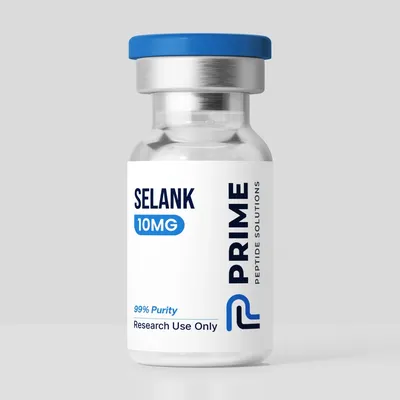
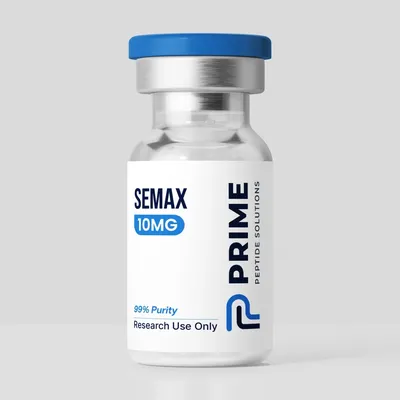
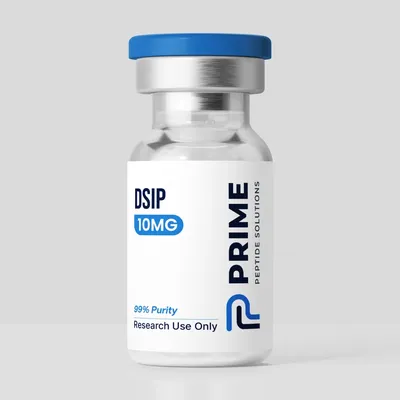
- Ships the same business day
- Free US shipping on $199.99+
- 14-day money-back guarantee on damaged items
References & Further Reading
- PubChem: Selank (CID 11765600), Semax (CID 9811102) and DSIP (CID 68816)
- PubMed: Current DSIP literature
- More neuro research peptides: Neuro research peptides
Research-Grade Selank, Semax and DSIP
In our catalog, Selank, Semax and DSIP are each supplied as a lyophilized powder in one size, a 10mg vial. Published lab reports (COAs) are listed on our COAs page.
Sold strictly for in-vitro laboratory research. Not for human or animal consumption.