
Selank vs Semax
Selank and semax are two synthetic peptides developed at Russian research institutes during the late 20th century. Both compounds were derived from naturally occurring regulatory peptides — selank from tuftsin, and semax from a fragment of adrenocorticotropic hormone (ACTH 4-10). Despite their shared origin in Russian peptide research and superficial similarities, published literature describes distinct molecular profiles and receptor interactions for each compound. This page summarizes the published research literature comparing these two peptides for laboratory research purposes only.
Research use only. The compounds discussed on this page are sold strictly as reference materials for in-vitro and animal research. They are not approved for human consumption, diagnosis, or treatment of any condition.
| Property | Selank | Semax |
|---|---|---|
| Origin peptide | Tuftsin analog | ACTH 4-10 fragment analog |
| Amino acid sequence | Thr-Lys-Pro-Arg-Pro-Gly-Pro | Met-Glu-His-Phe-Pro-Gly-Pro |
| Length | 7 amino acids | 7 amino acids |
| Molecular weight | ~751 Da | ~813 Da |
| Developed at | V.V. Zakusov Institute (Russia) | Institute of Molecular Genetics (Russia) |
| Year first published | 1990s | 1980s |
| Pathways studied in literature | GABAergic, serotonergic, immune | BDNF/NGF expression, melanocortin |
| Reported half-life (published) | ~10 minutes | ~20-30 minutes |
| Stability | Lyophilized powder, stable refrigerated | Lyophilized powder, stable refrigerated |
About Selank
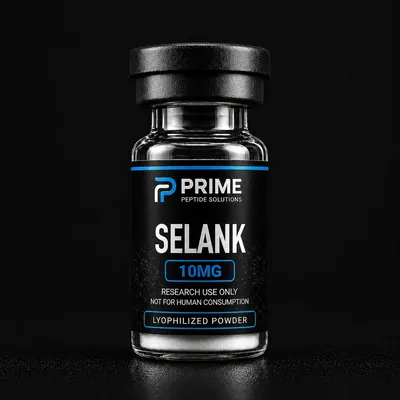
Selank is a synthetic heptapeptide developed at the V.V. Zakusov Institute of Pharmacology in Russia. Its sequence (Thr-Lys-Pro-Arg-Pro-Gly-Pro) is derived from tuftsin, a naturally occurring peptide fragment of immunoglobulin G. The C-terminal proline-glycine-proline extension was added to improve stability against enzymatic degradation in research applications.
Published research literature has characterized selank's interactions with GABAergic and serotonergic systems in animal models. Studies have also examined its effects on cytokine balance and expression of certain neurotrophic factors in in-vitro experiments. Selank does not appear in published literature as a sedating compound and has been studied in awake-animal protocols.
For laboratory research only. Not for human use.
About Semax
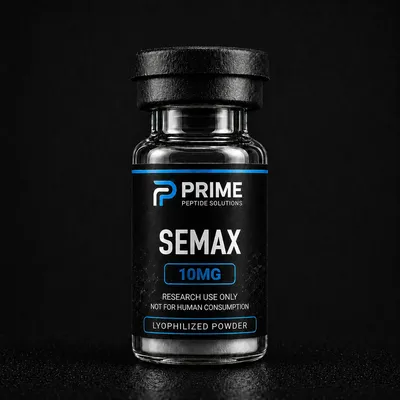
Semax is a synthetic heptapeptide developed at the Institute of Molecular Genetics in Russia. Its sequence (Met-Glu-His-Phe-Pro-Gly-Pro) is an analog of fragment 4-10 of adrenocorticotropic hormone (ACTH), with the same proline-glycine-proline stabilizing extension as selank. The compound is structurally unrelated to selank despite their shared design approach.
Published literature describes semax's interactions with the melanocortin receptor system and its observed effects on brain-derived neurotrophic factor (BDNF) and nerve growth factor (NGF) expression in animal models. Pharmacokinetic studies report a reported half-life of approximately 20-30 minutes following intranasal administration in research subjects, longer than that reported for selank.
For laboratory research only. Not for human use.
Which Should Researchers Choose?
The choice depends entirely on the research question being investigated:
- For studies of GABAergic or serotonergic pathways, selank is the compound described in published literature for those mechanisms.
- For studies involving BDNF/NGF expression or melanocortin receptor activity, semax has the more extensive published literature.
- For comparative pharmacokinetic studies, the difference in half-lives (~10 min vs. 20-30 min) may itself be the research variable of interest.
- For studies that simply require a Russian-developed nootropic-classified peptide as a reference compound, either may be appropriate depending on availability and study design.
Both compounds are research peptides intended strictly for laboratory study. Researchers should consult current published literature and their institutional review processes before designing any study.
Frequently Asked Questions
What is the main difference between selank and semax?
They are structurally unrelated peptides with different amino acid sequences and parent molecules. Selank is derived from tuftsin and has been studied in the context of GABAergic and serotonergic pathways. Semax is derived from ACTH 4-10 and has been studied in the context of BDNF/NGF expression and the melanocortin receptor system.
Are selank and semax the same as approved pharmaceutical drugs?
Neither selank nor semax is approved by the U.S. Food and Drug Administration. Both have regulatory histories in Russia but are not approved for any use in the United States. The research-grade versions sold by vendors are intended strictly for laboratory study and are not approved for human consumption or any clinical purpose.
How are these peptides stored for research?
Both selank and semax are typically supplied as lyophilized (freeze-dried) powders. Published handling protocols recommend storing the lyophilized powder refrigerated, with longer-term storage at -20°C. After reconstitution with bacteriostatic water, vials are generally stored refrigerated and used within typical research timelines for short peptides.
What is the published half-life of each?
Published pharmacokinetic studies report a half-life of approximately 10 minutes for selank and 20-30 minutes for semax following intranasal administration in research subjects. These figures are from published animal and small human research studies — they do not constitute dosing guidance.
Why are both peptides 7 amino acids long?
This is coincidental rather than designed. Both compounds were created by Russian research programs that used a similar approach: take a naturally occurring active peptide fragment and add a stabilizing C-terminal extension (Pro-Gly-Pro) to slow enzymatic degradation. The parent peptides happened to be similar in length, resulting in two final compounds that are both heptapeptides despite being structurally and functionally unrelated.
Can these be used for the same research applications?
Generally no. Despite being grouped as "Russian nootropic peptides" in popular literature, the published research describes them targeting different molecular systems. Choosing the appropriate compound depends on the specific pathway or receptor system being studied. Some comparative studies have included both compounds as part of broader investigations into Russian-developed peptides.
Shop these products
- Ships the same business day
- Free US shipping on $199+
- 14-day money-back guarantee