
CJC-1295 With DAC vs Without DAC
CJC-1295 is a synthetic analog of growth hormone-releasing hormone (GHRH). It exists in two forms in the research market: with DAC (Drug Affinity Complex) and without DAC (sometimes called Modified GRF 1-29). The DAC modification dramatically changes the compound's pharmacokinetics, primarily its half-life. Choosing between the two depends on whether your research design calls for pulsatile or sustained GHRH receptor activation.
| Property | CJC-1295 with DAC | CJC-1295 without DAC |
|---|---|---|
| Other names | CJC-1295-DAC | Modified GRF 1-29, MOD-GRF |
| Half-life | ~6-8 days | ~30 minutes |
| Modification | Bound to albumin via DAC | No DAC, freely metabolized |
| Effect on GH | Sustained elevation | Pulsatile effect |
| Typical research pairing | Standalone use | Often paired with Ipamorelin |
About CJC-1295 with DAC
The DAC (Drug Affinity Complex) modification allows the molecule to covalently bind to serum albumin in vivo, dramatically extending its half-life from approximately 30 minutes to roughly 6-8 days in published research data. The result in research models is a sustained elevation of GH and IGF-1 baseline levels rather than the natural pulsatile pattern.
About CJC-1295 without DAC (Mod GRF 1-29)
Without the DAC modification, CJC-1295 (Modified GRF 1-29) has a half-life of approximately 30 minutes. This short half-life allows it to produce pulsatile effects on the GHRH receptor, closer to the natural rhythm of endogenous GHRH release. In research protocols, this version is often paired with a ghrelin mimetic like Ipamorelin.
Which Should Researchers Choose?
Choose based on the research design:
- Sustained GHRH receptor activation -> CJC-1295 with DAC.
- Pulsatile GH release patterns -> CJC-1295 without DAC.
- Combining with Ipamorelin or other GHRPs -> Without DAC is the more common research pairing.
Frequently Asked Questions
What does DAC mean?
DAC stands for Drug Affinity Complex - a maleimidopropionic acid that covalently binds the peptide to serum albumin in vivo, extending half-life dramatically.
Why is the half-life so different?
The DAC modification allows the peptide to bind to serum albumin in vivo, protecting it from rapid metabolic breakdown.
Which is better?
Neither is universally better - they serve different research purposes.
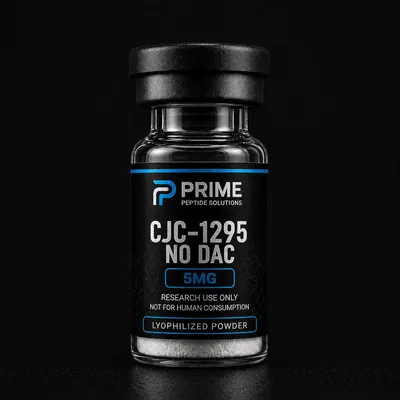
Shop CJC-1295 NO DAC
- Ships the same business day
- Free US shipping on $199+
- 14-day money-back guarantee