
GHK-Cu vs AHK-Cu
GHK-Cu and AHK-Cu are two related tripeptide-copper complexes studied extensively in skin, hair, and tissue research. They share a similar structural framework, both are copper-bound tripeptides, but differ by a single amino acid that meaningfully changes their research applications. GHK-Cu is the more historically established compound; AHK-Cu has emerged more recently with research focused on hair follicle pathways.
| Property | GHK-Cu | AHK-Cu |
|---|---|---|
| Sequence | Glycyl-L-Histidyl-L-Lysine + Cu | Alanyl-L-Histidyl-L-Lysine + Cu |
| Differs by | - | Alanine instead of Glycine at position 1 |
| First characterized | 1973 (Pickart) | Late 1990s |
| Primary research focus | Skin, wound, anti-aging | Hair follicle, dermal papilla |
| Literature size | Extensive (decades of studies) | Smaller but growing |
About GHK-Cu
GHK-Cu was first characterized by Dr. Loren Pickart in 1973 and has been the subject of extensive research over five decades. The tripeptide naturally occurs in human plasma and declines significantly with age. Research literature has explored its effects on collagen and elastin synthesis, antioxidant gene expression, anti-inflammatory pathways, and wound-healing models.
About AHK-Cu
AHK-Cu replaces the glycine in GHK with alanine, producing a structurally similar but functionally distinct tripeptide-copper complex. Research on AHK-Cu has focused primarily on hair follicle research, particularly dermal papilla cell stimulation in published studies.
Which Should Researchers Choose?
The choice is fairly clear-cut based on research focus:
- Skin, wound healing, anti-aging research -> GHK-Cu.
- Hair follicle or dermal papilla research -> AHK-Cu.
- Combination studies -> Some research protocols use both.
Frequently Asked Questions
How are GHK-Cu and AHK-Cu different?
They differ by a single amino acid at the first position - GHK-Cu starts with glycine, AHK-Cu starts with alanine.
Why is GHK-Cu more well-known?
GHK-Cu was identified in 1973 and has been the subject of much more research.
Can they be used together in research?
Some research protocols use both compounds.
Shop GHK-Cu
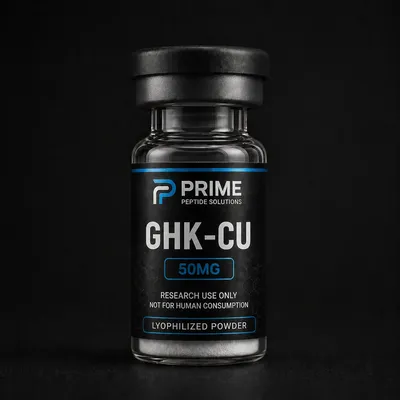
- Ships the same business day
- Free US shipping on $199+
- 14-day money-back guarantee