
Thymosin Alpha-1 vs Thymosin Beta-4: Two Unrelated Thymosins, and Where TB-500 Fits
Thymosin alpha-1 and thymosin beta-4 share a name, but they are unrelated peptides. This catalog lists Thymosin Alpha-1 and TB-500, a shorter synthetic fragment of thymosin beta-4. Both were first sequenced from thymosin fraction 5, a calf-thymus extract containing a mixture of small polypeptides: thymosin alpha-1 in 1977 and thymosin beta-4 in 1981. A 2012 NMR review describes the thymosins as unrelated to each other in a genetic sense and as appearing to have different functions within the cell. They are encoded by different genes (PTMA and TMSB4X), belong to different protein families, and neither is a fragment of the other.
Thymosin alpha-1 is a 28-residue acidic peptide studied for Toll-like receptor signaling in dendritic cells and T-cell maturation in cell and animal models. Thymosin beta-4 is a 43-residue G-actin-sequestering protein studied for actin dynamics and cell migration. The actin and migration findings here come from thymosin beta-4 research, not from TB-500 itself.
Both are supplied as lyophilized powder strictly for in-vitro laboratory research. The research-grade material sold here is not approved for human use and is not for human or animal consumption.
| Property | Thymosin Alpha-1 | Thymosin Beta-4 (parent protein of TB-500) |
|---|---|---|
| Gene and protein family | PTMA; pro/parathymosin family (cleaved from prothymosin alpha) | TMSB4X; thymosin beta family |
| Mature chain | 28 residues; N-acetylserine start, free-acid C-terminal asparagine | 43 residues; initiator methionine removed from a 44-residue precursor, N-acetylserine start |
| First sequenced (calf thymus fraction 5) | 1977 | 1981 |
| Molecular formula (PubChem) | C129H215N33O55 | C212H350N56O78S (parent protein) |
| Molecular weight (PubChem) | 3108.3 g/mol | 4963 g/mol (parent protein) |
| Isoelectric point | 4.2 (highly acidic) | 5.1 (bovine protein, 1981 sequence paper) |
| Methionine and cysteine | None | One methionine (Met6 of the 43-residue chain); no cysteine |
| Shape in water | Unstructured; helical in SDS micelles | Unstructured; folds on binding G-actin |
| Main pathways studied | TLR9/MyD88 signaling in dendritic cells, IDO induction, T-cell maturation (cell and animal models) | G-actin sequestration (1:1 complex), cell migration, PINCH-ILK-Akt signaling |
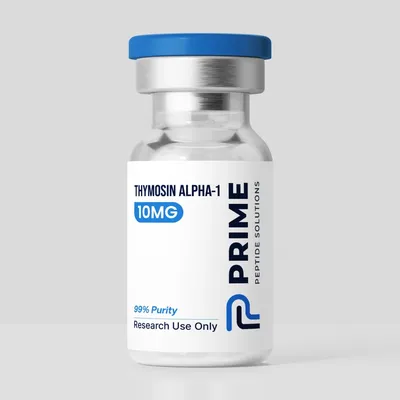
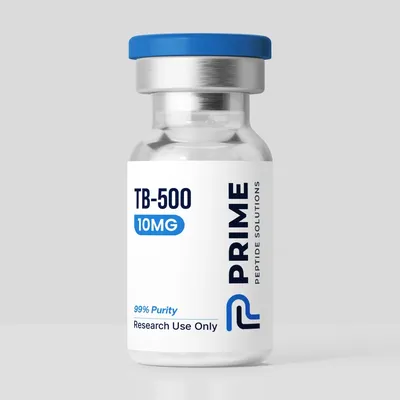
| In this catalog | Thymosin Alpha-1, 10mg vial | TB-500, 10mg vial: a synthetic fragment derived from thymosin beta-4 |
About Thymosin Alpha-1
Thymosin alpha-1 is the 28-residue peptide Ac-SDAAVDTSSE ITTKDLKEKK EVVEEAEN-OH, with an acetylated N-terminal serine and a free-acid C-terminal asparagine. PubChem lists it as C129H215N33O55 (3108.3 g/mol, CAS 62304-98-7). UniProt annotates it as residues 2-29 of human prothymosin alpha (gene PTMA), with the initiator methionine removed and serine 2 N-acetylated, and a 2007 review states that it is produced by cleavage of prothymosin alpha in diverse mammalian tissues. A 2023 review describes it as highly acidic (isoelectric point 4.2), with no disulfide bonds, no glycosylation and six adjacent repeats (Ala-Ala, Ser-Ser, Thr-Thr, Lys-Lys, Val-Val, Glu-Glu).
Structure. NMR and circular dichroism work (2015) found the peptide completely unstructured in water. In SDS micelles it takes a helical conformation with a break around residues 9 and 14, and residues 1-5 insert into the hydrophobic region of the micelle. The authors state that a precise receptor for the peptide "still remains elusive" and suggest that it folds on the membrane, where it may interact with nearby proteins or receptors.
Pathways studied. In fungus-pulsed dendritic cells, thymosin alpha-1 induced functional maturation and interleukin-12 production through a p38 MAPK/NF-kB-dependent pathway, signaling through the MyD88-dependent pathway and distinct Toll-like receptors (2004). A 2006 study describes priming of dendritic cells through TLR9 and induction of indoleamine 2,3-dioxygenase (IDO) in murine dendritic cells; IDO activation required TLR9 and type I interferon receptor signaling and led to interleukin-10 production and the generation of regulatory T cells. A 2007 review adds activation of plasmacytoid dendritic cells through TLR9/MyD88, involving interferon regulatory factor 7. The 2023 review reports in-vitro effects on T-cell production and maturation, and describes regulation of cytokines including IL-2, IL-4, IFN-gamma and TNF-alpha in cell and animal models.
Search the literature with PubMed: thymosin alpha 1.
About Thymosin Beta-4 and TB-500
Thymosin beta-4 is encoded by TMSB4X and belongs to the thymosin beta family. UniProt describes a 44-residue precursor whose initiator methionine is removed, leaving a 43-residue chain with an N-acetylserine start; its first four residues are separately annotated as the hemoregulatory peptide AcSDKP. UniProt gives its function as organizing the cytoskeleton by binding and sequestering actin monomers (G-actin), which inhibits actin polymerization. A 2007 review calls the beta-thymosins the main intracellular G-actin-sequestering peptides in most vertebrate cells and places thymosin beta-4 in the nucleus as well as the cytoplasm.
Actin binding. A 1991 study found that Fx, the actin-sequestering peptide of human platelets, has a sequence identical to thymosin beta-4. The protein forms a 1:1 complex with actin monomers and inhibits salt-induced polymerization of G-actin. The 2007 review adds that the complex has a dissociation constant in the micromolar range, which allows fast binding and release, and that the protein is unstructured until it folds on G-actin.
Migration and signaling. In endothelial-cell migration and vessel-sprouting assays (2003), a seven-amino-acid actin-binding motif was essential for activity, and peptides lacking any part of it were inactive. In embryonic heart tissue and cultured cardiomyocytes (2004), thymosin beta-4 promoted myocardial and endothelial cell migration and formed a functional complex with PINCH and integrin-linked kinase, leading to activation of Akt. Oxidizing its methionine to the sulfoxide attenuates G-actin sequestering, and the sulfoxide inhibited neutrophil chemotaxis in vitro (1999). A 2007 review notes that very little is known about the mechanisms behind effects attributed to extracellular beta-thymosins.
Where TB-500 fits. TB-500 is a shorter synthetic fragment of the 43-residue protein. A 2024 analytical study of the peptide states that "the biological effects of TB-500, however, have not been documented." For that reason, the actin, migration and Akt findings above belong to thymosin beta-4 research.
Search the literature with PubMed: thymosin beta 4.
Which Should Researchers Choose?
The two peptides answer different laboratory questions, so the choice follows the pathway under study:
- Toll-like receptor signaling in dendritic cells: Thymosin alpha-1, for TLR9/MyD88-dependent signaling, p38 MAPK/NF-kB activation and interleukin-12 readouts.
- Tryptophan catabolism and regulatory T cells: Thymosin alpha-1, for IDO induction that depends on TLR9 and type I interferon receptor signaling.
- T-cell maturation and cytokine profiling in cell culture: Thymosin alpha-1, with readouts such as IL-2, IL-4, IFN-gamma and TNF-alpha reported in the published cell and animal literature.
- Membrane-induced folding: Thymosin alpha-1, a disordered peptide in water that becomes helical in SDS micelles, for NMR and circular dichroism designs.
- Actin dynamics and cell migration: the G-actin, migration and PINCH-ILK-Akt data come from thymosin beta-4 research, not from TB-500. A design using TB-500 in these assays tests the fragment itself, and its findings are read against that parent-protein literature.
- Fragment metabolism and analytical chemistry: TB-500, where a 2024 analytical study examined the fragment it tested and shorter acetylated fragments derived from it, and studied its breakdown in in-vitro incubations with human serum and with enzyme systems.
The two are studied for unrelated pathways.
Frequently Asked Questions
Are thymosin alpha-1 and thymosin beta-4 related?
No. They share the historical "thymosin" label because both were isolated from thymosin fraction 5, but they come from different genes and different protein families, and neither is a fragment of the other. A 2003 review notes that none of the peptides isolated from fraction 5 is really a thymic hormone, and a 2007 review notes that large amounts of thymosin beta-4 were found in many cells.
Is TB-500 the same as thymosin beta-4?
No. Thymosin beta-4 is the natural 43-residue protein, and TB-500 is a shorter synthetic fragment of it. The formula and molecular weight in the table belong to the parent protein, not to TB-500. A 2024 analytical study states that the biological effects of TB-500 have not been documented.
Does either peptide have a known receptor?
Not a defined one. For thymosin alpha-1, a precise receptor still remains elusive, with Toll-like receptor involvement reported in cell and animal models. For thymosin beta-4, the best-characterized binding partner is intracellular G-actin, and little is known about how effects attributed to extracellular beta-thymosins are mediated.
Do their sequences affect handling?
Thymosin beta-4 contains one oxidizable methionine (Met6 of the 43-residue mature chain), three glutamines and one asparagine, while thymosin alpha-1 has a single asparagine and no methionine, cysteine or tryptophan; neither has a disulfide bond. These counts describe full-length thymosin beta-4 and do not carry over to a shorter synthetic fragment such as TB-500. Both product pages give the same storage: lyophilized vials at 2-8 °C, or -20 °C long-term, and refrigerated after reconstitution. General peptide handling also keeps vials cold, dry and away from light. See the peptide storage guide.
How do the vial sizes compare?
Each is sold as a 10mg vial of lyophilized powder, with bacteriostatic water sold separately in 3 mL and 10 mL vials.
Is the research-grade material sold here approved for human use?
No. The research-grade Thymosin Alpha-1 and TB-500 sold here are not approved for human use, are not for human or animal consumption, and are not equivalent to any approved medicine. Batch Certificates of Analysis are published on the COA page as they become available; check it for a report matching the product and batch.
Shop these products
- Ships the same business day
- Free US shipping on $199.99+
- 14-day money-back guarantee on damaged items