
IGF-1 LR3 vs CJC-1295 no DAC + Ipamorelin: Downstream Analog vs Upstream Secretagogues
IGF-1 LR3 and the CJC-1295 no DAC + Ipamorelin blend both belong to the growth hormone (GH) and IGF-1 axis, but at opposite ends. The blend holds two secretagogues that act upstream, at pituitary and hypothalamic receptors that control GH release from somatotroph cells. IGF-1 LR3 is an 83-residue IGF-1 analog that acts downstream, directly at the IGF-1 receptor, and in binding assays it binds IGF-binding proteins (IGFBPs) far more weakly than native IGF-1.
Between the two ends sits the liver. GH drives Igf1 transcription there mainly through JAK2-STAT5b signalling, mouse gene-deletion work identifies the liver as the principal source of IGF-1 in the blood, and serum IGF-1 exerts negative feedback on GH secretion at the hypothalamus and pituitary. This page compares the compounds behind two catalog items, IGF-1 LR3 and CJC-1295 no DAC + Ipamorelin: where each acts on that axis, their structure, the pathways studied in cell and animal models, and handling.
Both are lyophilized powders sold strictly for in-vitro laboratory research. The research-grade material sold here is not approved for human use and is not for human or animal consumption.
| Property | IGF-1 LR3 | CJC-1295 no DAC + Ipamorelin |
|---|---|---|
| Position on the axis | Downstream: acts at the IGF-1 receptor itself | Upstream: acts at receptors that control pituitary GH release |
| Composition | One 83-residue IGF-1 analog | Two peptides in one vial: a 29-residue GHRH(1-29) analog amide and a pentapeptide |
| Defining structure | Arg for Glu at position 3 plus a 13-residue N-terminal extension | CJC-1295 without the albumin-binding DAC group; ipamorelin Aib-His-D-2-Nal-D-Phe-Lys-NH2 |
| Target receptor | IGF1R, a receptor tyrosine kinase | GHRH receptor (GPCR family B-III) and GHS-R1a (Gq-coupled GPCR) |
| Signalling studied | PI3K-Akt and Ras-MAPK/ERK in cell models | cAMP (GHRH receptor) and intracellular Ca2+ (GHS receptor) in somatotrophs |
| Molecular mass | About 9111 Da (average, computed from sequence) | About 3367.9 Da (CJC-1295 no DAC); 711.9 g/mol (ipamorelin) |
| IGFBP or albumin binding | Far lower affinity than IGF-1 for IGFBP-3, IGFBP-4, rat plasma IGFBPs and a rat cell-line binding protein (binding assays) | No DAC group, so no covalent albumin conjugation |
| Listed sizes | 1mg vial | 10mg (5 mg + 5 mg, per its COA) and 20mg vials |
| Handling notes | Supplier datasheets name dilute acetic acid (100-500 mM) | One vial, two peptides; in the 1:1 10mg vial each is at half the total concentration |
About IGF-1 LR3 (downstream: the IGF-1 receptor)
Structure. IGF-1 LR3 carries the complete 70-residue human IGF-1 sequence with arginine in place of glutamic acid at position 3 (the "R3") plus a 13-residue N-terminal extension, MFPAMPLSSLFVN (the "L" in LR3), for 83 residues in total. Computed from the sequence with three disulfide bonds, the formula is C400H619N111O115S9 (average mass about 9111 Da), and an LC-MS paper lists a monoisotopic mass of 9105.4 Da, against 7643.6 Da for native IGF-1.
Receptor and signalling. The analog acts at IGF1R, a receptor tyrosine kinase of two alpha and two beta chains. Ligand binding triggers phosphorylation of IRS1/2 and Shc and activates PI3K-Akt (with mTOR) and Ras-MAPK. In cultured fetal sheep cardiomyocytes, LR3 IGF-1 raised BrdU uptake, a DNA-synthesis marker, several-fold, and inhibitors of ERK or PI3K signalling abolished that uptake.
Why IGFBP binding matters. Native IGF-1 had far higher affinity than the analog for IGFBP-3, IGFBP-4 and rat plasma binding proteins, and in a rat cell-line assay the analog was more potent than IGF-1. In chicken embryo fibroblasts, which secrete no detectable IGFBPs, it was less potent than IGF-1. The authors conclude that the analog's greater potency in IGFBP-secreting cells comes from changes in its IGFBP interactions. Plasma binding also varies by species: weakest in rat plasma, significant in sheep, human, pig and chicken plasma.
"Long" does not denote a longer half-life, at least in rats. In rats the analog was cleared from plasma much faster than IGF-1 and circulated mostly as free peptide. Rat plasma binds it unusually weakly, so these rat figures should not be generalized. The originating paper reports that the hydrophobic extension appears to aid correct folding. Other animal work covers rat intestinal crypt proliferation and a pig study in which plasma IGFBP-3, endogenous IGF-1 and GH fell. See the LR3IGF-I PubMed search.
About CJC-1295 no DAC + Ipamorelin (upstream: GH secretagogues)
CJC-1295 no DAC. A modified GHRH fragment, (D-Ala2, Gln8, Ala15, Leu27)-GRF(1-29) amide: Y-dA-DAIFTQSYRK VLAQLSARKL LQDILSR-NH2. The formula C152H252N44O42 (about 3367.9 Da) is consistent with the 29-residue amide and with the 3365.9 Da monoisotopic mass listed in an LC-MS analytical paper (detected as the 5+ ion). The DAC form adds a C-terminal lysine carrying a maleimidopropionamide group that bioconjugates to Cys34 of serum albumin; the no-DAC peptide in this blend lacks it, so DAC-mediated albumin conjugation and multi-day persistence do not apply. It targets the GHRH receptor, a family B-III GPCR expressed predominantly in pituitary somatotrophs in the rat, which signals mainly through cAMP; GHRH also activates the MAP kinase pathway in somatotrophs.
Ipamorelin. A pentapeptide, Aib-His-D-2-Nal-D-Phe-Lys-NH2 (C38H49N9O5, 711.9 g/mol). In primary rat pituitary cells it released GH with potency and efficacy similar to GHRP-6, acting through a GHRP-like receptor. From work in swine, its authors described its selectivity for GH release as similar to that of GHRH. These are animal and cell data only; see the ipamorelin mechanism overview.
The GHS-R1a receptor. The GH secretagogue receptor, a Gq-coupled GPCR of the pituitary and hypothalamus cloned in 1996, defines a neuroendocrine pathway for pulsatile GH release. Its endogenous ligand is ghrelin, a 28-residue peptide with an n-octanoylated serine 3. GHS signalling raises intracellular Ca2+ in somatotrophs, whereas GHRH raises cAMP, so the two components of the blend reach one cell type through distinct receptors. See the secretagogue research overview and CJC-1295 vs ipamorelin.
Which Should Researchers Choose?
The choice follows the level of the axis a laboratory question addresses:
- IGF-1 receptor signalling: IGF-1 LR3 acts directly at IGF1R, so it fits cell studies of PI3K-Akt and MAPK/ERK signalling, IRS1/2 and Shc phosphorylation, or DNA-synthesis markers with no pituitary input.
- IGFBP biology: its weak IGFBP binding makes the analog a comparator for native IGF-1 when binding proteins in the medium or plasma are the question; the species of plasma or cell line matters.
- GH release: the blend fits pituitary cell studies of GH secretion, where GHRH-receptor (cAMP) and GHS-R1a (Ca2+) inputs are examined together.
- Isolating one receptor: the blend supplies both secretagogues in one vial; single-receptor designs use CJC-1295 no DAC or ipamorelin, which the catalog lists separately (see ipamorelin vs CJC-1295 no DAC).
- Feedback: in published pig work, IGF-1 and the LR3 analog both lowered plasma GH, an example of the negative feedback that links the two ends of the axis.
Frequently Asked Questions
Do IGF-1 LR3 and CJC-1295 + ipamorelin act on the same receptor?
No. IGF-1 LR3 binds IGF1R, a receptor tyrosine kinase. CJC-1295 no DAC binds the GHRH receptor and ipamorelin the GH secretagogue receptor, both GPCRs that govern GH release upstream of IGF-1.
What does "LR3" mean, and does the N-terminal extension mean a longer half-life?
The "L" (Long) refers to the 13-residue N-terminal extension and "R3" to the arginine at position 3. The name does not indicate a longer plasma half-life, at least in rats: there the analog was cleared from plasma faster than native IGF-1. Rat plasma binds it unusually weakly, so these figures should not be generalized to other species.
What solvent do published datasheets name for IGF-1 LR3?
A reference-material datasheet names 500 mM acetic acid with stock at or above 100 µg/mL, followed by further dilution into other aqueous solutions, and a manufacturer FAQ for a cell-culture reagent names 100 mM acetic acid with stock at 1 mg/mL or more. This catalog does not sell acetic acid, and none of the sources reviewed document dissolving IGF-1 LR3 powder directly in another diluent. The datasheet advises storing the powder desiccated below -18 °C and avoiding repeated freezing and thawing; the FAQ recommends low-protein-binding tubes, since the peptide can adsorb to plastic and glass. The two give different shelf-life figures, so neither is given here as a specification.
How is the blend's stock concentration calculated?
The 10mg vial holds 5 mg CJC-1295 no DAC and 5 mg ipamorelin (a 1:1 split, per its batch COA); for the 20mg vial, the split is on its vial label and batch COA. For in-vitro stock preparation, stock concentration (mg/mL) is the vial total divided by the diluent volume, and in the 10mg vial each component is at half that figure: for example, 10 mg in 2 mL gives 5 mg/mL total, or 2.5 mg/mL of each peptide.
Are these approved for human use?
No. Both products are sold strictly for in-vitro laboratory research, are not approved for human use and are not for human or animal consumption. The batch Certificate of Analysis for the CJC-1295 no DAC + Ipamorelin blend is published on the COA page. For IGF-1 LR3, batch Certificates of Analysis are published on the COA page as they become available; check it for a report matching the product and batch. HPLC and mass spec explains how identity and purity are checked.
Shop these products
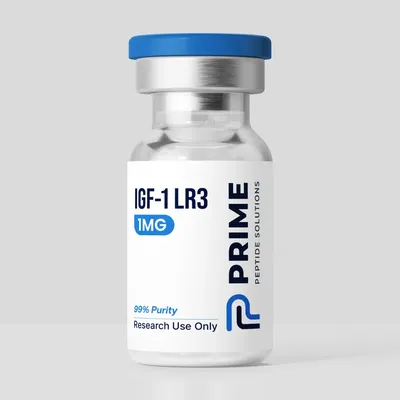
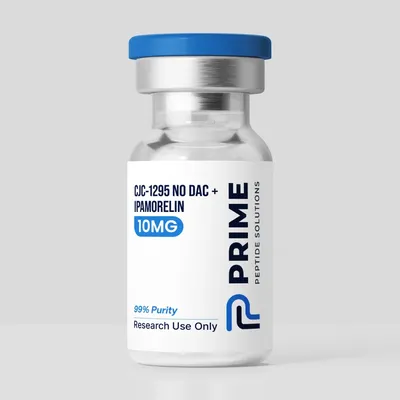
- Ships the same business day
- Free US shipping on $199.99+
- 14-day money-back guarantee on damaged items