

What is Retatrutide?
Retatrutide is a synthetic peptide studied in metabolic research as a triple receptor agonist. It is one of the more recent compounds in the incretin research class, designed to engage three distinct receptor systems at once: the GLP-1 receptor, the GIP receptor, and the glucagon receptor.
This places Retatrutide at the leading edge of a design progression that has moved from single-target peptides like Semaglutide, through dual agonists, to multi-receptor compounds intended to engage several metabolic pathways simultaneously.
This article is intended as a scientific overview for laboratory researchers. Retatrutide is sold strictly for in-vitro research and is not for human consumption.
Background: The Incretin and Glucagon Pathways
Retatrutide is defined by the three receptors it engages, so understanding those pathways is the starting point.
GLP-1 signaling
GLP-1 (Glucagon-Like Peptide-1) is an incretin hormone that acts on the GLP-1 receptor, expressed in pancreatic cells, the central nervous system, and peripheral tissues. It is the foundational pathway for this research class.
GIP signaling
GIP (Glucose-Dependent Insulinotropic Polypeptide) acts on the GIP receptor and represents the second incretin pathway. Dual agonists added this target to GLP-1 engagement.
Glucagon receptor signaling
The glucagon receptor (GCGR) is the third pathway, studied in connection with energy expenditure and hepatic metabolism. Engaging this receptor alongside the two incretin receptors is what defines Retatrutide as a triple agonist.
Structure and Design
Retatrutide is a synthetic peptide engineered to bind all three receptors. Like other peptides in this class it carries modifications that promote stability and an extended half-life, including features that resist enzymatic degradation and support albumin binding. Its defining design feature is the balanced activity across GLP-1, GIP, and glucagon receptors within a single molecule.
Proposed Mechanism of Action
In research literature, Retatrutide is studied for simultaneous engagement of its three target receptors. The two incretin pathways (GLP-1 and GIP) are examined in connection with glucose-dependent signaling, while the glucagon-receptor component brings energy-expenditure and hepatic-metabolism pathways into the same molecule. The inclusion of glucagon-receptor activity is the key research distinction from single- and dual-agonist compounds. As a newer peptide, much of its profile remains an active area of investigation, and the available evidence comes from laboratory and animal research.
Current Research Areas
Retatrutide appears in metabolic research examining how triple-pathway engagement differs from single- or dual-pathway compounds. Because it adds glucagon-receptor activity, it is studied specifically in connection with energy-expenditure and hepatic-metabolism questions that single GLP-1 agonists do not directly address. It is also used in comparative research alongside compounds like Semaglutide and dual agonists to map the effects of adding receptor targets.
Stability and Laboratory Handling
General Handling Considerations
Retatrutide arrives lyophilized and is reconstituted with bacteriostatic water for research use. Lyophilized material is stored cold and protected from light. Reconstituted peptide is refrigerated and used within a defined window. Because it is a higher-molecular-weight peptide, careful reconstitution practice helps preserve integrity.
Verifying Quality
Identity and purity should be confirmed by a Certificate of Analysis backed by HPLC and mass spectrometry. With newer peptides like Retatrutide, COA verification is especially important because reference material is less widely circulated than for long-established compounds.
Frequently Asked Research Questions
What makes Retatrutide a triple agonist?
It is designed to engage three receptors at once: GLP-1, GIP, and the glucagon receptor. Single agonists engage one (GLP-1), and dual agonists engage two (GLP-1 and GIP).
What does the glucagon-receptor activity add?
In research terms, glucagon-receptor engagement brings energy-expenditure and hepatic-metabolism pathways into the compound's activity, which the incretin receptors alone do not directly cover.
How is Retatrutide different from Semaglutide?
Semaglutide engages a single receptor (GLP-1). Retatrutide engages three. They are different research tools rather than ranked by a single strength scale.
Is Retatrutide approved for human use?
Retatrutide is sold by Prime Peptide Solutions strictly as a research compound for in-vitro laboratory study and is not for human consumption or in-vivo human use.
What purity should research-grade Retatrutide have?
High purity verified by HPLC and confirmed by mass spectrometry, with the exact figure stated on a batch-specific Certificate of Analysis.
Conclusion
Retatrutide represents the multi-agonist direction of metabolic peptide research, engaging GLP-1, GIP, and glucagon receptors within a single molecule. The addition of glucagon-receptor activity is what distinguishes it from the single- and dual-agonist compounds that preceded it. For laboratories, the relevant considerations are its three-receptor design, its status as a newer and actively studied compound, and the importance of COA verification given its more limited circulation.
Disclaimer: This article is provided for educational and research purposes only. Information contained herein is a summary of publicly available scientific literature and does not constitute medical advice. Retatrutide and all peptide compounds sold by Prime Peptide Solutions are intended strictly for laboratory research and are not for human consumption, in-vivo human use, or therapeutic application. Researchers are responsible for compliance with all applicable regulations governing peptide use in their jurisdiction.
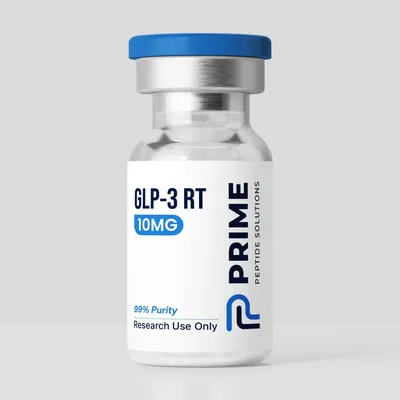
Shop GLP-3 RT
- Ships the same business day
- Free US shipping on $199.99+
- 14-day money-back guarantee on damaged items
References & Further Reading
- PubMed: Current peer-reviewed Retatrutide literature
- PubMed: Triple-agonist research overview
- Related: Semaglutide vs Tirzepatide Research Comparison
- Related: Peptide Reconstitution Guide
- Tool: Peptide Reconstitution Calculator
- For batch-specific COAs, see our published Certificates of Analysis
- Guide: How to Reconstitute Retatrutide (10mg and 20mg Vials)
- Related: Tirzepatide: Mechanism of Action and Research Applications
- Related: Semaglutide: Mechanism of Action and Research Applications
- Compare: Tirzepatide vs Retatrutide
Research-Grade Retatrutide
In our catalog, Retatrutide is listed as GLP-3 RT (retatrutide), supplied as a lyophilized powder and third-party tested for purity. Certificates of Analysis are available for every batch on our COA page.
Sold strictly for in-vitro laboratory research. Not for human or animal consumption.