

What are Semaglutide and Tirzepatide?
Semaglutide and Tirzepatide are two synthetic peptides extensively studied in metabolic research literature. While they are often discussed together due to overlapping research applications, they differ fundamentally in their receptor target profiles — Semaglutide acts on a single receptor pathway, while Tirzepatide simultaneously activates two distinct receptor systems.
Both compounds have generated significant scientific interest as research tools for studying metabolic signaling, energy homeostasis, and related pathways. They represent two generations of peptide design: Semaglutide as a refined single-target agonist, and Tirzepatide as a more recent dual-agonist innovation.
This article is intended as a scientific overview for laboratory researchers comparing these compounds. All peptides discussed are sold strictly for in-vitro research and are not for human consumption.
Background: The GLP-1 and GIP Signaling Systems
Before comparing these two compounds, a brief overview of the underlying biology is useful:
GLP-1 (Glucagon-Like Peptide-1)
GLP-1 is an incretin hormone produced primarily by L-cells in the intestinal lining. It is secreted in response to nutrient intake and acts through the GLP-1 receptor (GLP-1R), a G protein-coupled receptor expressed in pancreatic beta cells, the central nervous system, and various peripheral tissues. GLP-1 has been studied extensively for its roles in glucose-dependent insulin secretion, gastric emptying regulation, and central pathways involved in food intake.
Native GLP-1 has a very short biological half-life (about 1-2 minutes) due to rapid degradation by the enzyme dipeptidyl peptidase-4 (DPP-4). This limitation drove development of GLP-1 receptor agonists with extended stability.
GIP (Glucose-Dependent Insulinotropic Polypeptide)
GIP is the other major incretin hormone, produced by K-cells in the upper small intestine. It acts through the GIP receptor (GIPR), which is expressed in pancreatic beta cells, adipose tissue, and select brain regions. Like GLP-1, GIP is rapidly degraded by DPP-4 in its native form.
Until recently, GIP received less research attention than GLP-1 in metabolic studies. The development of dual GIP/GLP-1 agonists has renewed interest in GIP signaling and its complementary role in metabolic regulation.
Semaglutide: A Long-Acting GLP-1 Receptor Agonist
Structure and Background
Semaglutide is a synthetic peptide structurally similar to native GLP-1, with strategic modifications that dramatically extend its half-life:
- Amino acid substitution at position 8 (alanine replaced with aminoisobutyric acid) — resists DPP-4 cleavage
- Fatty acid side chain conjugation — binds reversibly to serum albumin, slowing renal clearance
- Linker modifications — optimize the albumin-binding properties
These modifications extend Semaglutide's half-life to approximately 1 week, compared to 1-2 minutes for native GLP-1. This makes it practical for research applications requiring sustained receptor engagement.
Receptor Activity
Semaglutide is a selective GLP-1 receptor agonist. It binds and activates the GLP-1R with high affinity, producing the downstream cellular effects characteristic of GLP-1 signaling. It does not significantly activate the GIP receptor or other related receptors at physiologically meaningful concentrations in research models.
Proposed Mechanisms in Research
Studies of Semaglutide in animal models have examined several pathways:
- Glucose-dependent insulin signaling: Activation of GLP-1R on pancreatic beta cells promotes insulin release in a glucose-dependent manner
- Glucagon modulation: Reported effects on alpha cell glucagon secretion in laboratory models
- Gastric emptying: Animal studies have reported delayed gastric emptying with GLP-1R activation
- Central appetite signaling: GLP-1R expression in brain regions including the hypothalamus and brainstem has been studied for effects on food intake regulation
- Cardiovascular research: GLP-1R is also expressed in cardiac tissue and vasculature, prompting research interest in cardiovascular outcomes models
Tirzepatide: A Dual GIP/GLP-1 Receptor Agonist
Structure and Background
Tirzepatide represents a different design philosophy: rather than refining a single-target agonist, it was engineered as a single peptide that simultaneously activates two receptors — both the GIP receptor and the GLP-1 receptor.
Its structure is based on the native GIP sequence, with modifications that enable cross-reactivity with GLP-1R while retaining GIP receptor activity. Like Semaglutide, Tirzepatide includes:
- Amino acid substitutions resisting DPP-4 cleavage
- A fatty acid side chain for albumin binding
- Extended half-life of approximately 5 days
Receptor Activity
Tirzepatide is a dual agonist — it activates both:
- GIP receptor (GIPR): Higher binding affinity than at GLP-1R
- GLP-1 receptor (GLP-1R): Moderate binding affinity
This dual activity is the central feature that distinguishes Tirzepatide from Semaglutide. Research interest centers on whether simultaneous activation of both receptor pathways produces effects different from single-receptor activation.
Proposed Mechanisms in Research
Studies of Tirzepatide in animal models have examined:
- Combined incretin signaling: Simultaneous GIP and GLP-1 receptor activation in beta cells
- Adipose tissue research: GIPR expression in adipose tissue has prompted interest in lipid metabolism studies
- Hypothalamic signaling: Both receptors are expressed in CNS regions relevant to energy homeostasis research
- Metabolic flexibility: Animal studies examining substrate utilization under combined receptor activation
Direct Comparison: Semaglutide vs Tirzepatide
- Receptor target: semaglutide, GLP-1R only; tirzepatide, GLP-1R + GIPR (dual)
- Half-life: semaglutide about 7 days; tirzepatide about 5 days
- Base structure: semaglutide, a GLP-1 analog; tirzepatide, a GIP analog with GLP-1R cross-reactivity
- DPP-4 resistance: both (semaglutide through the position 8 substitution; tirzepatide through several modifications)
- Albumin binding: both (semaglutide a C18 fatty acid; tirzepatide a C20 fatty acid)
- Molecular weight: semaglutide about 4,114 Da; tirzepatide about 4,814 Da
- Generation: semaglutide, a refined single-target agonist; tirzepatide, a newer dual-target design
Current Research Areas
The published literature on both compounds spans many research interest areas. The following list represents research interest areas in published literature — not validated therapeutic uses, since research peptide forms are not approved for human use.
Shared research areas
- Glucose homeostasis models: Animal studies of insulin and glucagon signaling in models of metabolic dysfunction
- Body composition research: Effects on fat mass and lean mass in rodent models
- Food intake studies: Central regulation of appetite in animal models
- Cardiometabolic research: Effects on cardiovascular tissues and lipid profiles in laboratory models
- Pharmacokinetics studies: Comparing albumin-bound long-acting peptides for research utility
Tirzepatide-specific research areas
- Dual incretin signaling: Studies examining whether dual receptor activation produces effects distinct from single-receptor activation
- GIPR biology: Renewed interest in GIP receptor function across tissues
- Adipocyte research: GIPR expression in adipose tissue has driven studies on lipid handling
Researchers can find primary sources via PubMed searches for "Semaglutide" or "Tirzepatide".
It's important to note that research-grade Semaglutide and Tirzepatide as sold for laboratory use are not approved for human consumption. The compounds have therapeutic approvals in specific approved formulations, but research peptide preparations are explicitly for in-vitro and animal research use only.
Stability and Laboratory Handling
Both peptides are typically supplied as lyophilized powders and share many handling considerations, with a few specific notes.
General Handling Considerations
- Lyophilized form storage: Refrigerated at 2-8°C is acceptable for short-term; frozen at -20°C for long-term storage
- Reconstitution: Bacteriostatic water for injection (BWFI) is the standard solvent. See our peptide reconstitution guide for technique
- Reconstituted shelf-life: Generally stable for 2-4 weeks under refrigeration. Avoid repeated freeze-thaw cycles
- Light sensitivity: Standard precautions — protect reconstituted solutions from prolonged light exposure
- Concentration tracking: Both peptides have relatively high molecular weights (4000+ Da), so precise reconstitution is important for accurate research dosing. Use our peptide reconstitution calculator to compute volumes
Verifying Quality
Research-grade Semaglutide and Tirzepatide should ship with batch-specific Certificates of Analysis documenting:
- Purity by HPLC (greater than 99% is the industry research standard)
- Identity confirmation by mass spectrometry
- Particular care with mass spec verification given the complexity of fatty acid conjugates
For more on how peptide quality is verified analytically, see our guide on HPLC and Mass Spectrometry. View our published third-party COAs for examples.
Frequently Asked Research Questions
Which is "stronger" — Semaglutide or Tirzepatide?
This question is more nuanced than a simple comparison. The two compounds activate different receptor profiles, so direct potency comparisons depend on which downstream effect is being measured. In published metabolic research models, Tirzepatide's dual GIP/GLP-1 activity has been reported to produce larger effects on certain endpoints compared to Semaglutide's GLP-1-only activity. However, individual receptor selectivity, half-life, and study design all influence comparative results.
Why develop a dual agonist instead of just using two separate peptides?
A single peptide that activates both receptors offers research advantages: consistent ratio of receptor activation across time, simplified pharmacokinetics, and the ability to study combined receptor signaling without confounding effects of separate dosing. Whether dual activation produces effects different from sequential single-receptor activation is an active research question.
Are Semaglutide and Tirzepatide approved for human use?
Approved pharmaceutical formulations of both compounds exist for specific medical conditions in human healthcare. However, research-grade preparations sold for laboratory use are not approved for human consumption. Research peptides differ from pharmaceutical products in their intended use, regulatory status, and labeling. Materials sold by Prime Peptide Solutions are explicitly for laboratory research only.
What purity should research-grade Semaglutide and Tirzepatide have?
Both should be characterized at greater than 99% purity by HPLC, with identity confirmed by mass spectrometry. The COA should document batch-specific values rather than only stating minimum specifications. Because these compounds include fatty acid modifications, mass spec verification is particularly important to confirm the correct conjugate is present.
Can they be used in the same research protocol?
Published literature has examined both compounds independently and in comparative studies, but combination protocols are rare given that Tirzepatide already activates both relevant receptors. Specific protocol decisions depend entirely on the research question being investigated.
How do these compare to older GLP-1 research peptides like Liraglutide or Exenatide?
Liraglutide and Exenatide are earlier-generation GLP-1 receptor agonists with shorter half-lives (24 hours and 2-4 hours, respectively). Semaglutide represents an evolution of the single-target agonist class with extended duration, while Tirzepatide introduced the dual-target approach. Each generation has been studied for specific research applications.
Conclusion
Semaglutide and Tirzepatide represent two different design strategies in long-acting peptide research: refined single-target agonism (Semaglutide) versus engineered dual-target activity (Tirzepatide). Their differences in receptor profile, half-life, and structure make them complementary research tools rather than direct substitutes. Researchers interested in GLP-1 signaling specifically may favor Semaglutide for its selectivity, while those examining combined incretin pathways may select Tirzepatide for its dual activity.
For researchers working with either peptide, sourcing from suppliers who provide third-party verified Certificates of Analysis is essential for experimental reproducibility. Proper reconstitution, careful storage, and protocol-specific handling all contribute to research integrity.
Disclaimer: This article is provided for educational and research purposes only. Information contained herein is a summary of publicly available scientific literature and does not constitute medical advice. Semaglutide, Tirzepatide, and all peptide compounds sold by Prime Peptide Solutions are intended strictly for laboratory research and are not for human consumption, in-vivo human use, or therapeutic application. Approved pharmaceutical formulations of these compounds exist separately for specific medical uses under healthcare provider supervision; research peptides are not equivalent to these approved products. Researchers are responsible for compliance with all applicable regulations governing peptide use in their jurisdiction.
Shop these products
- Ships the same business day
- Free US shipping on $199+
- 14-day money-back guarantee
References & Further Reading
- PubMed: Current peer-reviewed Semaglutide literature
- PubMed: Current peer-reviewed Tirzepatide literature
- PubMed: GLP-1 receptor agonist research overview
- Related: Peptide Reconstitution Guide
- Related: Understanding HPLC and Mass Spec
- Tool: Peptide Reconstitution Calculator
- For batch-specific COAs, see our published Certificates of Analysis
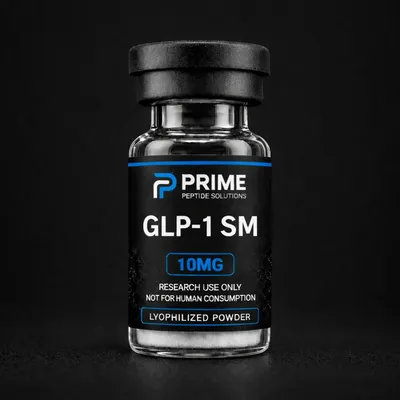
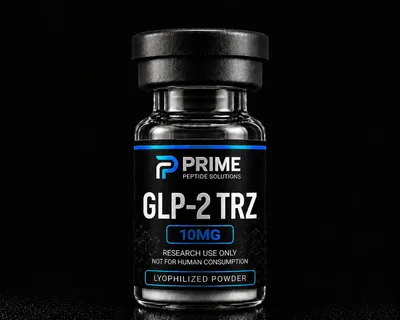
- Products: GLP-1 SM (semaglutide) · GLP-2 TZ (tirzepatide)
- Related: Semaglutide: Mechanism of Action and Research Applications
- Related: Tirzepatide: Mechanism of Action and Research Applications
- Guide: How to Reconstitute Semaglutide (10mg Vials)
- Guide: How to Reconstitute Tirzepatide (10mg and 20mg Vials)