

What Reconstituting MOTS-C Involves
MOTS-c is supplied as a lyophilized (freeze-dried) powder in a sealed vial. Reconstitution means adding a measured volume of sterile diluent so the powder cake becomes a stock solution of known concentration. This store lists MOTS-C in 10 mg, 20 mg and 40 mg vials, so the same volume of diluent gives a different concentration in each, and most of the care goes into planning, labeling and gentle handling.
This guide is a laboratory handling reference. MOTS-c is not an approved drug, and the material offered here is sold strictly for in-vitro research and is not approved for human use. It is not for human or animal consumption.
MOTS-C at a glance
- Sequence: MRWQEMGYIF YPRKLR, 16 amino acids, free N-terminal amine and free C-terminal acid (not amidated)
- Molecular formula: C101H152N28O22S2
- Molecular weight: about 2174.6 g/mol
- Handling-relevant residues: two Met, one Trp and one Gln; no Cys, so no disulfide bond
- Origin: a short open reading frame in the mitochondrial 12S rRNA gene (MT-RNR1), first reported in 2015
MOTS-c is one of the mitochondrial-derived peptides, alongside humanin and SHLP1-6. In cell models it has been studied for its effect on the folate pathway and linked purine synthesis, with accumulation of the endogenous purine intermediate AICAR and activation of AMPK. The published cell and animal work is indexed in the PubMed searches under References; this page stays with bench handling.
What You Need
- The lyophilized MOTS-C vial (10, 20 or 40 mg), with its batch number noted
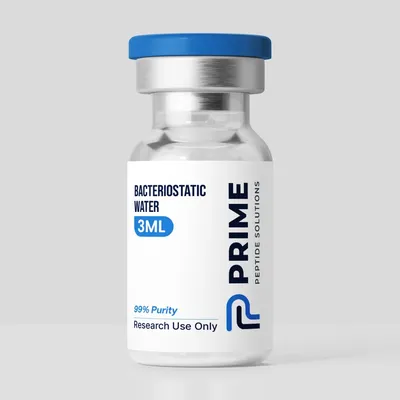
- Diluent: bacteriostatic water (sterile water with a preservative; conventionally 0.9% benzyl alcohol in sterile water), sold separately in 3 mL and 10 mL vials
- A new sterile syringe and needle used only to move the diluent
- Alcohol wipes, a fine-tip marker and a clean, draft-free bench
Plan the diluent supply first: any volume above 3 mL needs the 10 mL vial or more than one 3 mL vial.
Concentration Math for 10mg, 20mg and 40mg Vials
Concentration (mg/mL) = peptide in the vial (mg) ÷ diluent added (mL)
For volumes not listed here, the MOTS-C calculator preset covers all three vial sizes; use it as a concentration tool for the mg/mL figure.
10 mg MOTS-C vial
- 1 mL of diluent gives 10 mg/mL
- 2 mL gives 5 mg/mL
- 3 mL gives about 3.33 mg/mL
- 4 mL gives 2.5 mg/mL
- 5 mL gives 2 mg/mL
20 mg MOTS-C vial
- 1 mL of diluent gives 20 mg/mL
- 2 mL gives 10 mg/mL
- 3 mL gives about 6.67 mg/mL
- 4 mL gives 5 mg/mL
- 5 mL gives 4 mg/mL
40 mg MOTS-C vial
- 2 mL of diluent gives 20 mg/mL
- 3 mL gives about 13.33 mg/mL
- 4 mL gives 10 mg/mL
- 5 mL gives 8 mg/mL
Reading the numbers
The same volume gives very different stocks: 2 mL makes 5 mg/mL in a 10 mg vial, 10 mg/mL in a 20 mg vial and 20 mg/mL in a 40 mg vial. Scaling vial and volume together keeps the concentration, so 10 mg in 1 mL, 20 mg in 2 mL and 40 mg in 4 mL all come out at 10 mg/mL. Equal mg/mL is all they share: each vial stays its own solution, labeled with its batch number, and vials should not be combined.
These figures are arithmetic, not a tested solubility limit, and no volume is more correct than another. The experiment sets the target concentration and the volume follows. Choose the volume that gives the concentration the experiment requires; the vial size and the diluent supply are the only other constraints.
Stepwise Reconstitution Procedure
- Bring the sealed vial to room temperature before piercing the stopper; a peptide solubility guide advises letting peptides warm up before reconstituting. Handling references advise letting cold peptide containers warm up before they are opened, because peptides tend to be hygroscopic and moisture taken up from the air reduces peptide content and may decrease stability.
- Confirm the plan. Check the vial size and write down the diluent volume and the concentration it gives.
- Disinfect both stoppers with alcohol wipes and let them air dry.
- Draw the planned volume of diluent with a fresh sterile syringe and needle.
- Add it slowly down the vial wall, never directly onto the powder cake.
- Let the vial stand undisturbed for a few minutes so the cake can wet.
- Swirl or roll gently until dissolved. Do not shake, vortex or warm the vial.
- Inspect the solution against a light and a dark background. It should be transparent and particle-free; a cloudy appearance means the peptide is not well solubilized.
- Label the vial with the concentration in mg/mL, vial size, date and batch number.
- Refrigerate promptly at 2-8 °C, away from light.
Why swirling, not shaking
In published formulation work on a peptide under combined interfacial stress, mild agitation or limited headspace produced minimal structural change or larger aggregates, while stronger agitation and more headspace promoted fibril formation. In another study, vortexing or rotating a solution of an aggregation-prone peptide with an air-water interface present considerably accelerated fibril formation. Neither study used MOTS-c, but both point the same way: gentle swirling is the conservative choice.
Give it time
A peptide handling reference notes that reconstitution may take time, occasionally up to several hours, and that excessive warming should be avoided. If the cake is slow to clear, allow more standing time. If the solution stays cloudy, set it aside and do not proceed with it; check the batch COA or contact the store.
Labeling three vial sizes
Because 2 mL of diluent produces 5, 10 or 20 mg/mL depending on the vial, a label showing only the vial size is not enough. Make the mg/mL figure the headline, then add the vial size, diluent volume, date and batch number.
Solubility, Storage and Common Mistakes
How MOTS-c behaves in water
MOTS-c is a basic peptide: it has five basic groups (three Arg, one Lys and the N-terminal amine) against two acidic ones (one Glu and the C-terminal carboxyl). PubChem lists a computed XLogP of -3.9, a hydrophilic value, and a reference data sheet describes making a stock solution by dissolving it in water. That fits bacteriostatic water as the diluent, with no call for organic solvents, acids or heat.
Oxidation sensitivity
Handling references single out Trp-, Met- and Cys-containing peptides as needing special care to avoid oxidation, and MOTS-c has two Met and one Trp. A validated LC/MS assay for the peptide included two oxidation products, and one solubility guide advises against DMSO for oxidation-sensitive peptides. Keep the solution cold, dark and short-lived, with nothing added beyond the planned diluent.
Storage
- Lyophilized vials: 2-8 °C, or -20 °C for long-term storage, per the product page
- Reconstituted solution: 2-8 °C in a temperature-stable laboratory refrigerator
- Light: keep the vial in an opaque container or otherwise shielded from light
- Temperature swings: avoid repeated freezing and thawing
Storage references advise against long-term storage of peptide solutions, especially sequences containing Gln, Met or Trp, all present in MOTS-c. No reliable source gives a fixed window for reconstituted MOTS-c, so none is quoted here: reconstitute close to when the material is needed. One reference data sheet advises against keeping a plain-water MOTS-c solution for more than one day; that solution was made in plain water, not bacteriostatic water, so the figure is not a shelf life for these vials, but it points the same way. The stability guide covers the general principles.
Common mistakes
- Piercing a cold vial before it reaches room temperature
- Jetting diluent onto the powder instead of down the glass
- Shaking, vortexing or warming to hurry dissolution
- Adding DMSO or acids when patience is what the cake needs
- Labeling by vial size alone
- Combining vials because their concentrations match
Frequently Asked Research Questions
How much bacteriostatic water goes into a MOTS-C vial?
It depends on the stock concentration the experiment calls for. For example, 2 mL gives 5 mg/mL in the 10 mg vial, 4 mL gives 5 mg/mL in the 20 mg vial and 5 mL gives 8 mg/mL in the 40 mg vial. The calculator preset gives the mg/mL figure for any other volume.
Is the 40mg vial handled differently?
No. The procedure is the same; only the arithmetic changes. Whatever the vial size, any volume above 3 mL (4 or 5 mL, for example) needs the 10 mL diluent vial or more than one 3 mL vial.
Can sterile water be used instead?
Bacteriostatic water differs from plain sterile water in one respect: it conventionally has 0.9% benzyl alcohol added as a preservative that limits microbial growth in the diluent. The bacteriostatic water explainer compares the options.
What should reconstituted MOTS-C look like?
Transparent and free of particles. Persistent haze or visible particles mean the peptide is not well dissolved. Allow more standing time, and if it stays cloudy, set it aside and check the batch documentation.
How do I confirm identity and purity?
The product page lists MOTS-C as HPLC and MS tested, and COAs are batch-specific, so match the batch number on the vial to its certificate. The guide to reading a COA explains each section.
Where does MOTS-c come from?
It was first reported in 2015 after an in-silico search of the human mitochondrial 12S rRNA for short open reading frames. It has been detected in various tissues of mice and rats and in rodent plasma.
Conclusion
Reconstituting MOTS-c is mostly decided before the stopper is pierced: which vial, how much diluent and therefore what concentration. After that, the short, hydrophilic peptide asks for patience rather than force. Run the diluent down the glass, swirl rather than shake, confirm the solution is clear, label it by mg/mL and keep it cold and dark.
Disclaimer: This guide is provided for educational and laboratory reference purposes only and does not constitute medical advice. MOTS-c and all compounds sold by Prime Peptide Solutions are intended strictly for in-vitro laboratory research, are not approved for human use, and are not for human or animal consumption. Researchers are responsible for complying with all regulations that apply in their jurisdiction.
Shop these products
- Ships the same business day
- Free US shipping on $199.99+
- 14-day money-back guarantee on damaged items
References & Further Reading
- PubMed: Peer-reviewed MOTS-c literature
- PubMed: Mitochondrial-derived peptide research
- PubMed: Agitation and peptide aggregation at air-water interfaces
- Guide: General peptide reconstitution guide
- Compare: SS-31 vs MOTS-c
Research-Grade MOTS-C
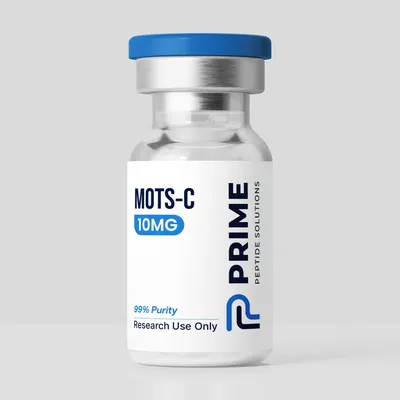
In our catalog, MOTS-c is listed as MOTS-C in 10 mg, 20 mg and 40 mg vials, supplied as a lyophilized powder, with bacteriostatic water sold separately. Batch-specific Certificates of Analysis are published on our COA page.
Sold strictly for in-vitro laboratory research. Not for human or animal consumption.