

Why Peptide Degradation Is a Chemistry Question
A peptide released at high HPLC purity does not stay that way by default. Reactive side chains and backbone bonds change slowly under ordinary laboratory conditions, and the products accumulate as new chromatographic peaks and new masses. The classic review split instability into chemical pathways that make or break covalent bonds (proteolysis, deamidation, oxidation, racemization, beta-elimination) and physical pathways such as aggregation, precipitation and surface adsorption (Manning et al., 1989). Its 2010 update added the dried state and the interplay between the two (Manning et al., 2010).
This article covers which residues are vulnerable, which conditions speed each reaction and what the product looks like on HPLC and mass spectrometry. Practical handling is covered in the reconstituted peptide stability guide and the lyophilization explainer.
This article is a chemistry reference for laboratory researchers. All compounds discussed are sold strictly for in-vitro research and are not for human or animal consumption.
The Main Pathways at a Glance
PathwayVulnerable sitesFavored byTypical MS shiftOxidationMet, Cys, Trp, His, TyrPeroxides, trace metals, light, dissolved oxygen+16 Da per oxygen (+32 Da for Met sulfone or N-formylkynurenine)DeamidationAsn (fastest when followed by Gly), GlnNeutral to alkaline pH, heat, some buffer species-17 Da (succinimide), then +1 Da (Asp/isoAsp)Asp isomerizationAsp, especially Asp-GlyMildly acidic to neutral pH0 Da (isoAsp), -18 Da (succinimide)Backbone hydrolysisAsp-X, Asp-Pro, Asn-ProStrongly acidic or alkaline pH, heatTwo fragments that sum to parent +18 DaDisulfide exchange, beta-eliminationFree Cys, disulfides, Ser/ThrNeutral to alkaline pH-2 Da per new disulfide; -34 Da (Cys to dehydroalanine)Diketopiperazine formationFree N-terminus, Pro or Gly at position 2Unprotonated N-terminal amineLoss of the first two residuesAggregation, fibrillationHydrophobic, amyloid-prone or lipidated sequencesHigh concentration, interfaces, agitation, pH near pINone (seen by SEC, turbidity, dye binding)
Oxidation: Methionine, Cysteine, Tryptophan and Histidine
A 1995 review identified methionine, cysteine, histidine, tryptophan and tyrosine as the residues most susceptible, driven by contaminating oxidants, transition-metal catalysis and light, and modulated by pH, temperature and buffer composition (Li et al., 1995). It also distinguished non-site-specific oxidation by free oxidants, which antioxidants can suppress, from site-specific metal-catalyzed oxidation, where adding an antioxidant may even accelerate the reaction.
Methionine sulfoxide
Methionine is among the most readily oxidized residues: hydrogen peroxide, hydroxyl radicals, hypochlorite and peroxynitrite convert its thioether to methionine sulfoxide, a change that can alter or remove activity (Vogt, 1995). Adding one oxygen atom raises the mass by 16 Da (15.995 Da monoisotopic), and further oxidation to the sulfone adds another 16 Da. Because the sulfoxide is more polar, Met-oxidized variants usually elute slightly earlier than the parent peak on reversed-phase HPLC.
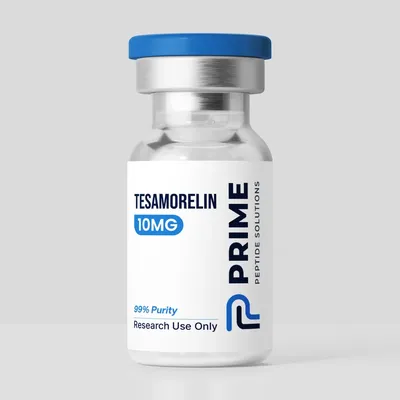
Designers often replace methionine for this reason: the GRF analogs in a 1991 stability paper carried leucine in place of native Met27 (Friedman et al., 1991), as does CJC-1295 no DAC. By contrast, Tesamorelin keeps the full native 44-residue GRF sequence behind its N-terminal hexenoyl group, so its Met27 remains a candidate oxidation site.
Tryptophan and histidine
Tryptophan oxidizes through several products with distinct mass signatures: hydroxytryptophan and oxindolylalanine (+16 Da), N-formylkynurenine (+32 Da) and kynurenine (+4 Da). Histidine is a frequent target of metal-catalyzed oxidation, with 2-oxo-histidine (+16 Da) a common product, because the imidazole ring binds transition metals and the reactive species is generated right at the binding site (Li et al., 1995).
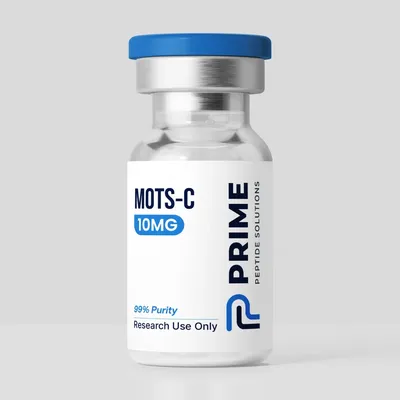
MOTS-C shows how several vulnerabilities can sit in one short chain. The 16-residue peptide described by Lee et al., 2015 has the sequence MRWQEMGYIFYPRKLR, with methionine at positions 1 and 6 and tryptophan at position 3. An aged MOTS-c sample would be checked for +16 and +32 Da species, and because three sites can give isobaric products, fragmentation (MS/MS) is needed to localize them.
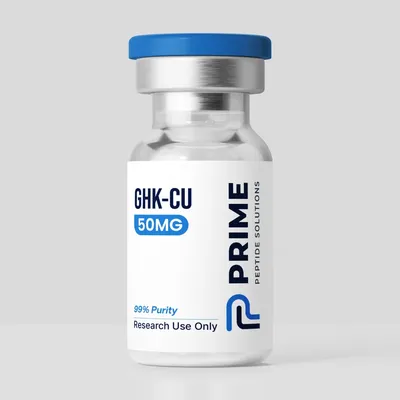
GHK-Cu is a special case. The tripeptide Gly-His-Lys is supplied as its copper(II) complex, so a redox-active metal is deliberately bound at the histidine. Metal-catalyzed oxidation is relevant in principle, though the papers cited here did not study GHK-Cu itself.
Cysteine
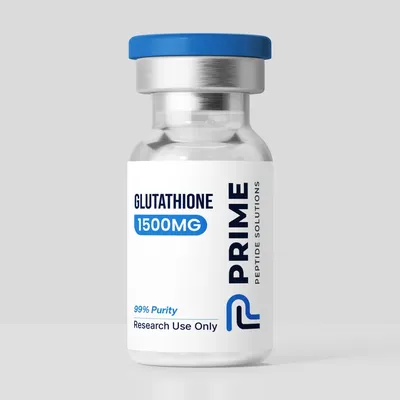
Free cysteine thiols oxidize to disulfides (-2 Da per bond, or a dimer at twice the parent mass minus 2 Da) and further to sulfur oxyacids (Trivedi et al., 2009). Glutathione (gamma-Glu-Cys-Gly) is the familiar example: air oxidation of its single thiol gives the disulfide dimer GSSG.
Deamidation of Asparagine and Glutamine via Succinimide
Deamidation converts asparagine to aspartate or isoaspartate (and glutamine to glutamate), adding a negative charge and 0.984 Da. At neutral and alkaline pH, the backbone nitrogen of the following residue attacks the Asn side-chain carbonyl, expelling ammonia and forming a five-membered cyclic imide, the succinimide (-17 Da relative to the parent). The succinimide then hydrolyzes at either carbonyl, giving a mixture of normal aspartyl and isoaspartyl (beta-linked) products.
The model hexapeptide Val-Tyr-Pro-Asn-Gly-Ala defined the numbers: at 37 °C and pH 7.4 it deamidated with a half-life of only 1.4 days, the succinimide intermediate hydrolyzed with a half-time of 2.3 hours and racemized with a half-time of 19.5 hours, and the products were L- and D-aspartyl and isoaspartyl peptides (Geiger & Clarke, 1987). Replacing the glycine after Asn with bulky leucine or proline slowed degradation 33- to 50-fold. Hence the Asn-Gly hotspot: glycine has no side chain to hinder the attack. Between pH 5 and 12 the same peptide deamidated exclusively through the cyclic imide, with buffer catalysis from pH 7 to 11, whereas at acidic pH direct side-chain hydrolysis gave only the Asp product (Patel & Borchardt, 1990).
What deamidation does to function
The clearest peptide example comes from the growth hormone releasing factor family. At pH 7.4 and 37 °C, [Leu27]hGRF(1-32)NH2 degraded mainly by deamidation of Asn8 to beta-Asp8 and alpha-Asp8 products, which were estimated to be 400 to 500 times and 25 times less potent in pituitary cell assays (Friedman et al., 1991). Replacing Asn8 with serine extended the half-life from 202 hours to 1550 hours, and the Ser8 analogs kept full activity after 14 days. CJC-1295 no DAC carries glutamine at position 8, while Tesamorelin retains the native Asn8.
Analytically, the +1 Da shift can hide in the isotope envelope of a larger peptide, so high-resolution MS is needed. The Asp and isoAsp products share a mass and are separated chromatographically, and a transient -17 Da species is the succinimide caught mid-reaction.
Aspartate Isomerization and Asp-Pro Cleavage
Aspartate follows the same cyclic-imide route, losing water (-18 Da) rather than ammonia. In the Asn-containing model peptide, substituting Asp for Asn cut the rate of succinimide formation 34-fold (Geiger & Clarke, 1987). In the Asp analog Val-Tyr-Pro-Asp-Gly-Ala, very acidic pH favored hydrolysis of the Asp-Gly bond, pH 4 to 5 gave isomerization and cleavage in parallel, and above pH 6 reversible isomerization to isoAsp was the only observed reaction (Oliyai & Borchardt, 1993). Because isoAsp has the parent's mass, it appears as a separate HPLC peak with a 0 Da shift.
Asp-Pro bonds are a special weakness. Their unusual lability was recognized as early as 1970, when Asp-Pro bonds were reported to cleave anomalously during sequence determination (Piszkiewicz et al., 1970). In the Asn series, Asn-Pro and Asn-Leu model peptides also produced cleavage products (Geiger & Clarke, 1987).
Peptide-Bond Hydrolysis and pH
Ordinary amide bonds are kinetically stable near neutral pH. Backbone hydrolysis becomes significant under strongly acidic or alkaline conditions and heat, and is fastest at specific sequence motifs, chiefly Asp-X, where the ionization state of the Asp side chain controls the rate (Oliyai & Borchardt, 1993). In the model peptides the dominant route shifted with pH, from Asp-X cleavage under strongly acidic conditions to cyclic-imide reactions at mildly acidic to neutral pH, so no single pH suppresses every pathway. In MS, hydrolysis appears as two fragments whose masses sum to the parent plus 18 Da (one water).
Disulfide Scrambling and Beta-Elimination
Thiols and disulfides catalyze both chemical and physical degradation (Trivedi et al., 2009). At neutral to alkaline pH a free thiolate can attack a disulfide, shuffling bridges into non-native pairings or linking two chains into a dimer. Scrambled isomers keep the native mass and are found by peptide mapping or retention shifts.
Beta-elimination is the base-catalyzed removal of a leaving group from the beta-carbon of Cys, Ser or Thr, giving dehydroalanine. For disulfides, a study in 0.2 M NaOH at 25 °C found that solvent-accessible bridges dissociated first and proposed a persulfide intermediate formed by beta-elimination (Florence, 1980). Beta-elimination is also listed among the reactions that proceed in solid formulations (Lai & Topp, 1999).
Diketopiperazine Formation
A peptide with a free N-terminal amine can attack its own second peptide bond, cyclizing the first two residues into a diketopiperazine (DKP) and leaving a chain shortened by two residues. In model X-Pro peptides, the rate depended on how much of the N-terminal amine was unprotonated (kinetic pKa 6.1), with general base catalysis by phosphate and glycine buffers, and the identity of the residue before proline changed the rate significantly at pH 7.0 (Goolcharran & Borchardt, 1998). Short peptides with Pro at position 2, such as KPV (Lys-Pro-Val), fit the motif, although DKP formation has not been characterized for that peptide specifically. N-terminal capping removes the free amine and with it this pathway.
Aggregation and Fibrillation
Physical instability needs no covalent change. A review of peptide aggregation lists sequence, concentration, pH, net charge, chemical degradation, interfaces, impurities, temperature, agitation and lyophilization as factors, and distinguishes amorphous aggregates from ordered fibrils (Zapadka et al., 2017). Chemical degradation is itself on that list, and the 2010 Manning update treats chemical and physical instability as interrelated rather than separate problems (Manning et al., 2010).
Glucagon is the classic case. In acidic solution at 37 °C, glucagon at 2.5 mg/mL or higher formed beta-sheet-rich fibrils within 24 hours, and even at 1 mg/mL fibrils appeared after 30 days (Onoue et al., 2004). Glucagon can form several fibril types with different molecular packing, each through a nucleation-dependent pathway that can be propagated by seeding (Pedersen, 2010).
Lipidated GLP-1 analogs show their own self-assembly. Semaglutide in water slowly formed spherical micelles at high concentration, with a small population of needle-shaped fibrils, and dimers and trimers at lower concentration (Hamley et al., 2025). Aggregates do not change the mass, so they are monitored by size-exclusion chromatography, light scattering, turbidity and beta-sheet-binding dyes. The cloudy-solution troubleshooting guide covers what to do when this is visible.
Moisture in Lyophilized Cakes
Freeze-drying slows these reactions but does not stop them. Deamidation, peptide-bond cleavage, oxidation, the Maillard reaction with reducing sugars, beta-elimination and dimerization all occur in the solid state, governed by temperature, moisture content, excipients and whether the matrix is amorphous or crystalline (Lai & Topp, 1999). In a factorial study of the Asp hexapeptide in lyophilized formulations, residual moisture, temperature and especially the type of bulking agent significantly affected solid-state reactivity, while the pH of the starting solution did not (Oliyai et al., 1994). Water also raises molecular mobility in the glassy cake and is itself a reactant in hydrolysis and succinimide ring opening.
Frequently Asked Research Questions
Why can a +1 Da impurity be hard to see?
Deamidation adds only 0.984 Da, close to the spacing of the natural carbon-13 isotope peaks, so it can be buried in the isotope envelope of a multi-kilodalton peptide. High-resolution MS, deconvolution and chromatographic separation of the Asp and isoAsp products are used to confirm it.
Is aggregation detectable by mass spectrometry?
Usually not directly, since non-covalent aggregates dissociate during ionization. Size-exclusion chromatography, light scattering and turbidity are the standard tools (Zapadka et al., 2017).
Conclusion
Peptide degradation follows a small set of well-characterized mechanisms: oxidation of Met, Trp, His and Cys; deamidation and isomerization through a succinimide; Asp-X cleavage under acid; disulfide exchange and beta-elimination under base; diketopiperazine formation at free N-termini; and aggregation of concentrated or lipidated sequences. Each leaves a characteristic signature, which is why a Certificate of Analysis pairs HPLC purity with a mass identity check. The HPLC and mass spectrometry overview explains how those measurements are made.
Disclaimer: This article is provided for educational and research purposes only. It summarizes publicly available scientific literature and does not constitute medical advice. All peptide compounds sold by Prime Peptide Solutions are intended strictly for laboratory research, are not approved for human use, and are not for human or animal consumption. Researchers are responsible for compliance with all applicable regulations in their jurisdiction.
Shop these products
- Ships the same business day
- Free US shipping on $149.99+
- 7-day money-back guarantee on damaged items
References & Further Reading
- PubMed: Peptide deamidation and succinimide chemistry
- PubMed: Methionine oxidation and peptide stability
- PubMed: Fibrillation of therapeutic peptides
- Guide: Reconstituted peptide storage and stability
Research-Grade Peptides from Prime Peptide Solutions
Our catalog of lyophilized research peptides is available in the shop, with bacteriostatic water sold separately. Batch Certificates of Analysis, with HPLC purity and mass identity results, are published on our COA page.
Sold strictly for in-vitro laboratory research. Not for human or animal consumption.