
AOD-9604 vs Tesamorelin
AOD-9604 and Tesamorelin both appear in adipose-tissue and lipolysis research, but they operate through fundamentally different mechanisms. AOD-9604 is a synthetic fragment of growth hormone investigated directly for fat-metabolism research; Tesamorelin is a GHRH analog that stimulates endogenous growth hormone. The comparison is common in metabolic research design.
| Property | AOD-9604 | Tesamorelin |
|---|---|---|
| Class | Modified GH fragment (177-191) | GHRH analog |
| Mechanism (research) | Direct effect on adipocyte metabolism | Indirect via GH release |
| Effect on GH levels | Minimal in research models | Increases endogenous GH |
| Primary research focus | Lipolysis, adipose tissue | Visceral adipose tissue |
| Half-life (reported) | ~30 minutes | ~26 minutes |
About AOD-9604
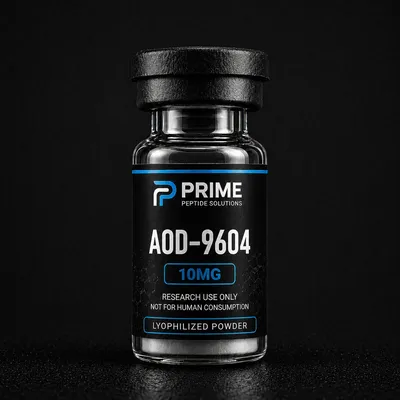
AOD-9604 is a modified fragment of the C-terminus of human growth hormone (residues 177-191). Research has characterized it for effects on adipose tissue lipolysis without producing the broader growth-promoting effects associated with full-length growth hormone. Studies in animal models have investigated its mechanism via beta-3 adrenergic pathways in adipocytes.
About Tesamorelin
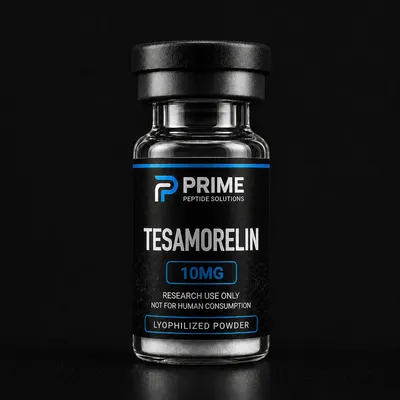
Tesamorelin is a stabilized synthetic analog of GHRH. Unlike AOD-9604, it acts upstream of growth hormone -- stimulating endogenous GH release from the pituitary. Research has primarily characterized its effects on visceral adipose tissue and circulating lipid markers in clinical research models.
Which Should Researchers Choose?
The choice depends on the research mechanism of interest:
- Direct adipocyte lipolysis research -> AOD-9604.
- Visceral adipose tissue research via GH -> Tesamorelin.
- Research focused on minimizing GH-axis effects -> AOD-9604 has minimal effect on endogenous GH.
Frequently Asked Questions
Are AOD-9604 and Tesamorelin in the same class?
No. AOD-9604 is a GH fragment; Tesamorelin is a GHRH analog. They act through different mechanisms.
Why are they compared in research?
Both have research history in adipose tissue, making them natural comparison points for metabolic research design.
Are these FDA approved?
Tesamorelin has clinical approval in some specific indications. AOD-9604 is an investigational research compound.
Shop these products
- Ships the same business day
- Free US shipping on $199+
- 14-day money-back guarantee