
Tesamorelin vs Ipamorelin
Tesamorelin and Ipamorelin are both investigated in growth hormone-axis research, but they act on different receptors and produce different research profiles. Tesamorelin is a GHRH analog; Ipamorelin is a ghrelin-receptor agonist. Researchers often weigh the two when designing studies around growth hormone pulsatility or visceral adipose tissue.
| Property | Tesamorelin | Ipamorelin |
|---|---|---|
| Class | GHRH analog | GHRP (ghrelin-receptor agonist) |
| Receptor | GHRH receptor (pituitary) | Ghrelin / GHS receptor |
| Primary research focus | Visceral adipose tissue, lipid markers | GH pulse, selective GH release |
| Selectivity (research) | GH-specific via GHRH | Minimal cortisol/prolactin effect |
| Half-life (reported) | ~26 minutes | ~2 hours |
About Tesamorelin
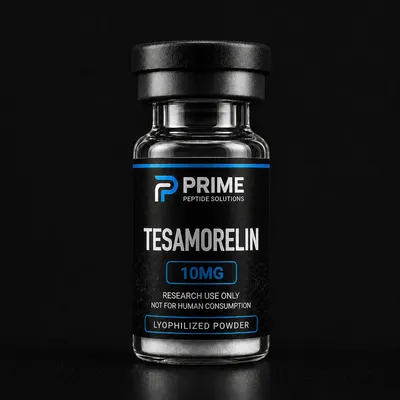
Tesamorelin is a synthetic analog of human growth hormone-releasing hormone (GHRH). Research has primarily characterized it for effects on visceral adipose tissue and lipid markers in animal and clinical research models. It stimulates endogenous growth hormone release through GHRH receptor activation rather than introducing exogenous growth hormone directly.
About Ipamorelin
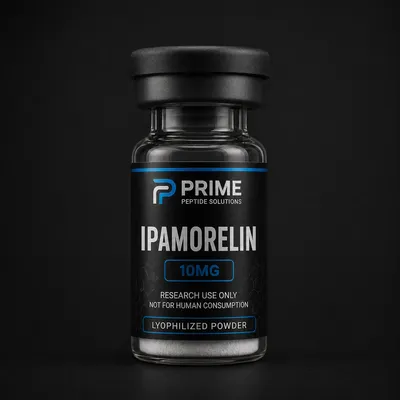
Ipamorelin is a pentapeptide and selective ghrelin-receptor agonist. Research literature characterizes it for its selectivity profile -- specifically that it has been investigated for growth hormone release without significant effect on cortisol or prolactin in research models. It is often grouped with other GHRPs (growth hormone releasing peptides).
Which Should Researchers Choose?
The choice depends on the research mechanism of interest:
- GHRH-axis research -> Tesamorelin.
- Selective GH-pulse research -> Ipamorelin.
- Combined GHRH + GHRP research -> Many protocols pair Tesamorelin or CJC-1295 with Ipamorelin to study synergistic GH release.
Frequently Asked Questions
Are these the same class of peptide?
No. Tesamorelin is a GHRH analog; Ipamorelin is a ghrelin-receptor agonist (GHRP).
Why are they often discussed together?
Both are investigated for growth hormone release but act through distinct receptors, so research protocols sometimes pair them.
Are these FDA approved?
Tesamorelin has clinical research history. Ipamorelin remains an investigational compound. Neither is approved for general human consumption outside of research.
Shop these products
- Ships the same business day
- Free US shipping on $199+
- 14-day money-back guarantee