

What Is GLP-3?
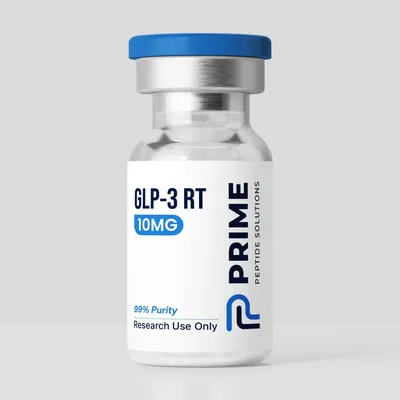
GLP-3 is an informal label, not the name of a natural hormone. It is used as shorthand for retatrutide, a synthetic 39-amino-acid peptide studied in metabolic research as a single molecule that acts at three receptors: the GIP receptor (GIPR), the glucagon-like peptide-1 receptor (GLP-1R) and the glucagon receptor (GCGR). Our own catalog uses the same shorthand in the product name GLP-3 RT.
There is no native "glucagon-like peptide-3". UniProt's annotation of the human proglucagon precursor lists GLP-1 and GLP-2 among its cleavage products but no GLP-3, and a search of reviewed UniProt entries for "glucagon-like peptide 3" returns no entries in any organism. There is no GLP-3 receptor either. Below: the real proglucagon peptides, the receptors involved, and how the naming works.
This article is a scientific explainer for laboratory researchers. The research-grade retatrutide, tirzepatide and semaglutide supplied by Prime Peptide Solutions are sold strictly for in-vitro laboratory research. They are not approved for human use and are not for human or animal consumption.
GLP-1 and GLP-2: The Real Proglucagon-Derived Peptides
GLP-1 and GLP-2 are genuine peptide hormones. Both are cut from one precursor protein, proglucagon (gene GCG), and both are described in the literature as prototype peptide hormones released from gut endocrine cells in response to nutrient ingestion. Each acts through its own G protein-coupled receptor.
One precursor, tissue-specific processing
Proglucagon is processed differently depending on the cell type that makes it:
- Pancreatic alpha (A) cells: the processing enzyme PC2 (PCSK2) cleaves out glucagon, which is the major bioactive hormone in these cells.
- Intestinal L cells: the enzyme PC1 (PCSK1) releases GLP-1, GLP-2, glicentin and oxyntomodulin. GLP-1 is mainly synthesized and released by L cells in the ileum and colon.
In full, UniProt lists the peptides cleaved from the human precursor as glicentin, glicentin-related polypeptide, oxyntomodulin, glucagon, GLP-1 and GLP-2. GLP-1 is further trimmed at its N-terminus inside L cells to give the truncated forms GLP-1(7-37) and GLP-1(7-36)amide, so research papers often write GLP-1 with residue numbers in parentheses.
GLP-2 in experimental work
GLP-2 has a different biology from GLP-1. In experimental models, native GLP-2 has been studied mainly in relation to intestinal epithelial biology. It acts through its own receptor, GLP-2R: cells expressing GLP-2R responded to GLP-2 with increased cAMP, but not to GLP-1 or related peptides.
What the numbers in GLP-1 and GLP-2 mean
The "1" and "2" are part of the hormone names and distinguish two related peptides encoded in the same precursor. They are not counts of receptors or targets, and there is no third peptide in the series.
Three Receptors: GIP, GLP-1 and Glucagon
Retatrutide's three targets are the GIP receptor, the GLP-1 receptor and the glucagon receptor. None of them is a "GLP-3 receptor", and the GLP-2 receptor is not among them. All three belong to the G protein-coupled receptor 2 family, and KEGG files them under the secretin receptor family. The GLP-2 receptor is in the same family but is a separate receptor, encoded by its own gene.
The GLP-1 receptor (GLP-1R)
GLP-1R is the receptor for GLP-1. Ligand binding activates adenylyl cyclase and raises intracellular cAMP, and the receptor plays a role in regulating insulin secretion in response to GLP-1.
The GIP receptor (GIPR)
GIP is not a proglucagon product. It comes from its own precursor, proGIP, and is released by K cells in the duodenum and proximal jejunum. Two expansions of the abbreviation are in use: UniProt gives "gastric inhibitory polypeptide" as the recommended name and "glucose-dependent insulinotropic polypeptide" as an alternative name. GIPR also signals through G proteins that activate adenylyl cyclase.
The glucagon receptor (GCGR)
GCGR is the receptor for glucagon. It couples to the G(s) protein, elevates intracellular cAMP and regulates the rate of hepatic glucose production by promoting glycogen hydrolysis and gluconeogenesis.
Incretin signaling in brief
GIP and GLP-1 are the two primary incretin hormones secreted from the intestine after nutrient ingestion. Binding to their receptors raises cAMP in pancreatic beta cells, which stimulates insulin secretion in a glucose-dependent way. Both native peptides are rapidly degraded by dipeptidyl peptidase-4 (DPP-4), which led to the development of degradation-resistant GLP-1 receptor agonists.
Single, Dual and Triple Agonists: How the GLP-3 Label Lines Up
A practical way to group the engineered peptides in this class is by how many of these receptors each one targets. KEGG lists the receptor targets of three well-studied compounds, rising from one target to three:
- Single agonist, semaglutide: one listed target, GLP1R. Semaglutide is a GLP-1 analogue with two amino acid substitutions compared with human GLP-1 (Aib8 and Arg34), derivatized at lysine 26 with a fatty acid moiety designed for high albumin affinity. Molecular weight about 4113.6 Da.
- Dual agonist, tirzepatide: two listed targets, GIPR and GLP1R. It is a fatty-acid-modified peptide described as "imbalanced", with greater engagement of the GIP receptor than the GLP-1 receptor. Molecular weight about 4813.5 Da.
- Triple agonist, retatrutide: three listed targets, GCGR, GIPR and GLP1R. Molecular weight about 4731 Da.
All three compounds are acylated with a fatty diacid attached through a linker to a lysine residue. For structure and receptor pharmacology in more depth, see the semaglutide research overview and the tirzepatide research overview.
Retatrutide at a glance
- Backbone: 39 amino acids, derived from a GIP backbone (not from GLP-1 or semaglutide)
- Lipidation: a C20 fatty diacid on a modified lysine, attached through a linker
- C-terminus: amidated
- Molecular formula: C221H342N46O68
- Molecular weight: about 4731 Da
- Albumin binding: the fatty diacid binds serum albumin reversibly and noncovalently
- Receptor targets: GCGR, GIPR and GLP-1R
How the three activities are described
Retatrutide is not equally balanced across its three receptors. A cryo-EM structural study reports that, compared with the corresponding endogenous hormones, it is more potent at GIPR and less potent at GCGR and GLP-1R. In vitro it shows balanced GCGR and GLP-1R activity but more GIPR activity. In mouse models, its glucagon-receptor activity has been linked to energy-expenditure pathways and its GIPR and GLP-1R activity to appetite-related signalling pathways. The retatrutide research overview covers this pharmacology in more detail.
An earlier triple-agonist concept
The idea of one peptide acting at all three receptors predates retatrutide. The literature describes "unimolecular triple agonism": a single monomeric peptide acting as an agonist at the GLP-1, GIP and glucagon receptors, reported in rodent models. Its authors assigned GIP action a role in buffering the glucose-raising effect of glucagon activity. That preclinical triagonist is a separate, earlier molecule; retatrutide was reported later as a novel triple agonist.
How does the GLP-3 label relate to target count?
The number loosely tracks the single, dual and triple pattern: one receptor target for semaglutide, two for tirzepatide and three for retatrutide. That makes "GLP-3" convenient shorthand, but it is not scientific nomenclature. Retatrutide is not a "GLP-3 agonist", because no GLP-3 hormone or receptor exists. It is a GIP, GLP-1 and glucagon receptor triple agonist, and only one of those three targets is a GLP receptor.
How the Catalog Names Map to Compounds
Prime Peptide Solutions lists its incretin-class research peptides under short catalog names. The letters abbreviate the compound and the number loosely follows the receptor-target count. These names are catalog identifiers only, not a regulatory or scientific naming standard.
- GLP-1 SM (semaglutide): semaglutide, a single GLP-1 receptor agonist, supplied in a 10mg vial. Here the number happens to match the hormone the compound is modeled on.
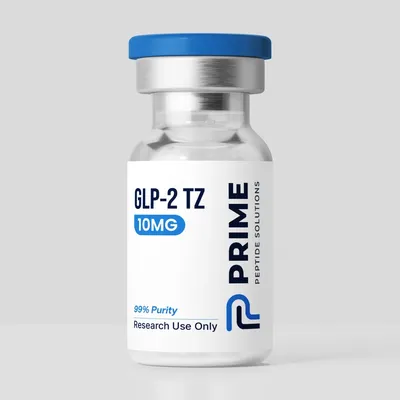
- GLP-2 TZ (tirzepatide): tirzepatide, a dual GIP and GLP-1 receptor agonist, supplied in 10mg and 20mg vials. Despite the "2", it is not a GLP-2 analog, does not contain GLP-2 and is not described as acting at the GLP-2 receptor; KEGG lists only GIPR and GLP1R as its targets.
- GLP-3 RT: retatrutide, the GIP, GLP-1 and glucagon receptor triple agonist, supplied in 10mg and 20mg vials. The product listing describes it as a synthetic 39-amino-acid peptide that is an agonist at the GIP, GLP-1 and glucagon receptors.
Frequently Asked Research Questions
Is GLP-3 a real hormone?
No. No GLP-3 peptide is annotated in the human proglucagon precursor, and reviewed UniProt entries contain no GLP-3 peptide and no GLP-3 receptor in any organism. "GLP-3" is an informal label for retatrutide.
Does retatrutide act on three GLP receptors?
No. Its three targets are the GIP receptor, the GLP-1 receptor and the glucagon receptor. Only the GLP-1 receptor is a GLP receptor, and retatrutide is not described as acting at the GLP-2 receptor.
Is GLP-2 TZ a GLP-2 analog?
No. GLP-2 TZ is our catalog name for tirzepatide, a dual GIP and GLP-1 receptor agonist. The "2" in the catalog name loosely tracks its two receptor targets. It is catalog shorthand, not a reference to the hormone GLP-2.
What is the regulatory status of GLP-3 RT?
The research-grade retatrutide sold by Prime Peptide Solutions is not approved for human use. It is supplied only as a reference material for in-vitro laboratory research and is not for human or animal consumption. The compound is described in published scientific literature, but the material in this catalog is not a medicine and should not be regarded as equivalent to any approved or investigational medicine.
Conclusion
GLP-1 and GLP-2 are real peptide hormones cleaved from proglucagon in intestinal L cells; glucagon is the major proglucagon product of pancreatic alpha cells, and GIP comes from a separate precursor in K cells. There is no GLP-3 hormone or receptor. "GLP-3" is shorthand for retatrutide, a GIP-derived triple agonist at the GIP, GLP-1 and glucagon receptors, and the number in each catalog name loosely tracks the one, two, three receptor-target progression.
Disclaimer: This article is provided for educational and research purposes only. It summarizes publicly available scientific literature and does not constitute medical advice. The research-grade retatrutide, tirzepatide and semaglutide, and all other peptide compounds sold by Prime Peptide Solutions, are intended strictly for laboratory research, are not approved for human use, and are not for human or animal consumption. Researchers are responsible for compliance with all applicable regulations in their jurisdiction.
Shop these products

- Ships the same business day
- Free US shipping on $199.99+
- 14-day money-back guarantee on damaged items
References & Further Reading
- PubMed: Current peer-reviewed retatrutide literature
- PubMed: Proglucagon processing and the GLP peptides
- PubMed: GLP-2 receptor research
- PubMed: GIP and GLP-1 incretin receptor biology
- PubMed: Unimolecular GLP-1, GIP and glucagon triple agonism
- Related: Semaglutide vs Tirzepatide vs Retatrutide
Research-Grade Retatrutide (GLP-3 RT)
In our catalog, research-grade retatrutide is listed as GLP-3 RT (retatrutide), supplied as lyophilized powder in sealed 10mg and 20mg vials. Lyophilized vials are stored at 2-8 °C, or at -20 °C for long-term storage, and the solution is kept refrigerated after reconstitution. The retatrutide reconstitution guide covers both vial sizes. Identity and purity are documented by HPLC and mass spectrometry, and batch lab reports (COAs) are listed on our lab reports page as they become available.
Sold strictly for in-vitro laboratory research. Not for human or animal consumption.