

What is Glutathione?
Glutathione (GSH) is a naturally occurring tripeptide composed of three amino acids — glutamate-cysteine-glycine. It is one of the most abundant antioxidants found within cells and is frequently described in research literature as the body's "master antioxidant" because of its central role in maintaining cellular redox balance.
Its activity is attributed largely to the thiol (-SH) group on its cysteine residue, which allows it to neutralize reactive oxygen species and participate in a wide range of cellular redox reactions.
This article is intended as a scientific overview for laboratory researchers. All compounds discussed are sold strictly for in-vitro research and are not for human consumption.
Discovery and Background
Glutathione has been studied for over a century and is one of the most extensively characterized small molecules in cell biology. It exists in cells in two forms — the reduced form (GSH) and the oxidized form (GSSG) — and the ratio between them is a widely used research marker of a cell's oxidative state.
Mechanism of Action
Glutathione's primary researched role is as an antioxidant and redox buffer. It donates electrons to neutralize reactive oxygen species, and in doing so becomes oxidized (GSSG); enzymes then regenerate the reduced form. It also participates in detoxification pathways, conjugating with various compounds to aid their processing, and serves as a cofactor for several antioxidant enzymes. Research literature examines glutathione across oxidative stress, cellular aging, and detoxification models.
Research Applications
Glutathione is examined in preclinical and in-vitro research including oxidative stress and redox balance studies, cellular aging and mitochondrial research, detoxification pathway investigation, and analytical characterization. Because it is a foundational cellular molecule, it frequently appears in research alongside other antioxidants and metabolic compounds. For a related molecule, see our overview of NAD+.
Laboratory Handling and Storage
Glutathione is supplied in lyophilized (freeze-dried) form. Store the lyophilized powder sealed, dry, and protected from light; -20°C is generally recommended for long-term storage. Reconstitute with bacteriostatic water using appropriate dilution calculations for the intended experimental concentration — see our reconstitution guide for detailed ratios. Once reconstituted, store at 2-8°C and minimize freeze-thaw cycles, which contribute to peptide degradation. Verify purity and identity documentation before use; see our overview of how peptide purity is verified.
Research-Grade Glutathione
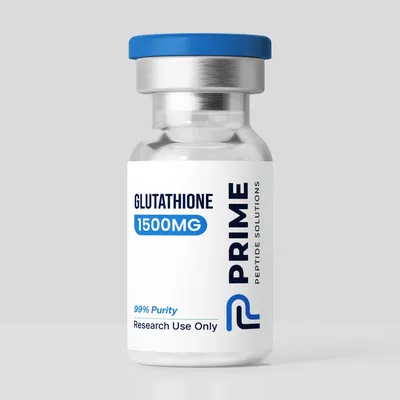
In our catalog, Glutathione is available as Glutathione, supplied as a lyophilized powder and third-party tested for purity. Certificates of Analysis are available for every batch on our COA page.
Sold strictly for in-vitro laboratory research. Not for human or animal consumption. This material has not been evaluated by the FDA.
Shop Glutathione
- Ships the same business day
- Free US shipping on $149.99+
- 7-day money-back guarantee on damaged items