
Ipamorelin vs Sermorelin
Ipamorelin and sermorelin are two of the most-studied growth hormone secretagogues in modern peptide research. Both compounds have been investigated for their ability to stimulate endogenous growth hormone release through the pituitary gland, but they act on different receptors and produce distinct pharmacological profiles in published studies. For researchers selecting between these peptides for laboratory investigation, understanding the mechanistic differences is essential to study design.
This comparison summarizes the published research literature on both compounds to help researchers make informed selections for their specific study objectives.
| Property | Ipamorelin | Sermorelin |
|---|---|---|
| Compound class | Growth hormone secretagogue (GHRP) | Growth hormone-releasing hormone analog (GHRH) |
| Receptor target | Ghrelin / GHS-R1a receptor | GHRH receptor |
| Amino acid count | 5 | 29 |
| Molecular weight | ~711 Da | ~3,358 Da |
| Half-life (research data) | ~2 hours | ~10–20 minutes |
| First synthesized | Late 1990s (Novo Nordisk) | 1970s |
| Selectivity profile | Highly selective for GH release | Selective for GHRH receptor pathway |
| Research category | GHRP (pentapeptide) | GHRH analog (truncated) |
About Ipamorelin
Ipamorelin is a pentapeptide (five amino acids) classified as a growth hormone-releasing peptide (GHRP). It was developed by Novo Nordisk in the late 1990s and is notable in research for its highly selective action — published studies indicate it stimulates growth hormone release through the ghrelin/GHS-R1a receptor pathway without significantly affecting cortisol, prolactin, or aldosterone levels, which distinguishes it from earlier GHRPs in the same class.
In published pharmacokinetic studies, ipamorelin demonstrates a research half-life of approximately two hours, which is longer than most GHRH analogs. Its selectivity has made it a frequent reference compound in studies investigating ghrelin receptor signaling and pulsatile GH release patterns in animal models.
About Sermorelin
Sermorelin is a synthetic 29-amino-acid peptide consisting of the first 29 residues of endogenous growth hormone-releasing hormone (GHRH 1–29). First synthesized in the 1970s, it is the shortest fragment of GHRH that retains full biological activity at the GHRH receptor in published studies. As a GHRH analog rather than a GHRP, sermorelin operates through an entirely different receptor pathway than ipamorelin.
Published research data indicates a relatively short half-life of approximately 10 to 20 minutes, after which it is metabolized. Because it acts on the GHRH receptor — the body's primary upstream regulator of pituitary GH release — sermorelin is frequently used in research investigating natural GH pulse mechanisms and pituitary feedback loops.
Which Should Researchers Choose?
The choice between ipamorelin and sermorelin depends on the specific research question being investigated:
- For ghrelin receptor (GHS-R1a) pathway research, ipamorelin is the appropriate compound. Its selectivity profile makes it well-suited for isolating GHS-R1a effects without confounding hormonal interactions.
- For GHRH receptor pathway research, sermorelin is the standard choice, as it mimics endogenous GHRH signaling at the pituitary.
- For dual-pathway or synergistic studies, both compounds are sometimes included together in research protocols, since GHRPs and GHRH analogs activate independent pathways that can be studied in parallel.
- For half-life-sensitive study designs, ipamorelin's longer research half-life (~2 hours vs. ~10–20 minutes) may simplify sampling windows in animal model studies.
Both compounds are research peptides intended strictly for laboratory study and are not approved for human use.
Frequently Asked Questions
What is the main difference between ipamorelin and sermorelin?
Ipamorelin is a growth hormone-releasing peptide (GHRP) that acts on the ghrelin/GHS-R1a receptor, while sermorelin is a growth hormone-releasing hormone (GHRH) analog that acts on the GHRH receptor. They activate two completely different upstream pathways of GH release in published research.
Which compound has a longer half-life?
Ipamorelin has a longer published research half-life of approximately two hours, compared to sermorelin's 10 to 20 minutes.
Are ipamorelin and sermorelin in the same family?
No. They are both classified as growth hormone secretagogues in the broad sense, but they belong to different mechanistic families — ipamorelin is a GHRP (pentapeptide), and sermorelin is a GHRH analog (truncated 29-amino-acid peptide). The distinction matters in receptor-focused research.
Which is more selective?
Published research indicates ipamorelin is more selective than older-generation GHRPs because it stimulates GH release without significantly elevating cortisol, prolactin, or aldosterone. Sermorelin is also highly selective, but for the GHRH receptor pathway rather than the ghrelin receptor.
Are these compounds approved for human use?
Sermorelin has historically had pharmaceutical formulations approved for limited clinical applications, but the research-grade peptide sold by vendors is NOT approved for human consumption and is intended strictly for laboratory research use only. Ipamorelin has never been approved for human use in any jurisdiction and is sold strictly for research purposes.
Can these compounds be studied together?
Yes — because they activate independent receptor pathways (GHS-R1a vs. GHRH receptor), combined-protocol studies are a common research design in published literature investigating synergistic effects on pituitary GH release.
Shop Ipamorelin
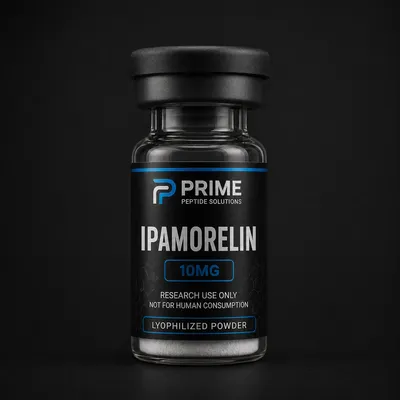
- Ships the same business day
- Free US shipping on $199+
- 14-day money-back guarantee